|

Holidays/Trips
Vietnam - Danang- Hoi Ann - Hue
China ZJJ
Tanjung Balai Karimun
Bintan Tours
Batam Tours
Belumut
INDO TOURS
Greece-Athens
Greece
Spain-Portugal
Portugal
SPAIN
Cambodia
Medan
Bali2
Kuala Lumpur
SG
Sarawak-Kuching
UK
Taiwan 2024
Israelsalem
France Swiss
Italy
Italy
France
Swiss
KK Treks
William KK Treks
William Treks
Israel 2014
Israel 2022
CHINA 2025
China Tours
China Li Jiang
China Ji An
Taiwan Tours
Hongkong Tours
Sg Tours
Asia Tours
Japan Tours
Indo Toba Tours
East Java 2023
Jakarta
Bali
Lombok
Java bromo
Malaysia Tours
Pontian Kukup
Malaysia Tours
Kuala Lumpur
PENANG
Legoland
Thailand
BKK Golf tour
Aust-NZ Tours
US Tours
Europe Tours
Golfing
Diving
Star Cruise
Speak it
Korea Tour
Korea-Jeju
Korean history
Indo Malang
China-Mongolia
Balkans
Vietnam-HCMC
Vietnam-HANOI
Batam Tours
Tioman Diving
Balkans
Eastern Europe
TURKEY
Egypt
Japan Hokkaido
NORWAY
Paul
CHINA
SOUTH AMERICA- ANTARCTICA
| | Medan

|
FLIGHTS
COSTS:$881.26/ $294 per pax
|
|
Airlines |
Flights |
Date |
ETD |
ETA |
Remarks |
|
Batik Air KEDCXP
Booking Ref: 1944179691
|
ID 7146 |
18 OCT 2025 |
1400PM |
1430 PM |
SG T3 -KNO |
|
Batik Air
DSOEES
Booking Ref: 1944179693
|
ID 7147 |
23 OCT 2025 |
1030 AM |
1300 PM |
KNO-SG T3 |
| MEDAN MAP
AIHO HOTEL MEDAN https://maps.app.goo.gl/P2sUbE3gBHA68vqx7
LABERSA
https://maps.app.goo.gl/QgmyjAd8fX8ncH8bA
|
| RUNNING MEDAN
A run around the area of the Aiho Hotel (formerly the
Radisson) in Medan is a great way to see a mix of the city's
history, local life, and modern development.
The area is quite
central, so you can craft a route that packs a lot in.
Here is a suggested running route, broken down by
distance and points of interest.
The "Medan Heritage & River"
Run
This route is approximately 4-5
km long, making it a perfect 30-45 minute run, depending on
your pace and how long you stop to look at things.
Route Overview: Aiho
Hotel → Titi Gantung → Sri Deli Bridge → Jalan Sisingamangaraja →
Lapangan Merdeka (Merdeka Square) → Return to Aiho Hotel.

Step-by-Step Guide &
Attractions
1. Start: Aiho
Hotel
2. Head North to
Titi Gantung (The Hanging Bridge) - ~0.7 km
-
Run north along Jalan Balaikota until you hit the
river (Sungai Babura). You'll see a unique, old pedestrian
bridge.
-
This is Titi Gantung,
a historic steel truss bridge from the Dutch colonial era. It's
a great photo spot and a tangible piece of Medan's history.
-
Attraction: Titi
Gantung. Cross the bridge and feel the history. You'll
get a good view of the river and the city life on both banks.
3. East along the
River to Sri Deli Bridge - ~0.5 km
-
After crossing Titi Gantung, turn right (east)
and run along the pedestrian path on the north side of the
river.
-
This path is part of a city revitalization project and is
popular with walkers and runners in the early morning and late
afternoon.
-
You'll run underneath the modern flyover and continue until you
reach the Sri Deli Bridge,
a large, green painted bridge.
4. Cross the Sri
Deli Bridge & Enter the Main Hub - ~0.5 km
5. Run West to
Lapangan Merdeka (Merdeka Square) - ~1.0 km
-
Turn left (west) onto Jalan Diponegoro. Continue
straight, and you will soon see the vast, open space of Lapangan
Merdeka (Merdeka Square) on your right.
-
This is the
city's central square.
-
Attractions:
-
Lapangan Merdeka: A
huge field where locals exercise, play sports, and relax.
-
Running on the perimeter path is a classic Medan experience.
-
Istana Maimun (Maimun
Palace): Just a 2-minute detour south from the
square!
-
This is the royal palace of the Deli Sultanate and
one of Medan's most iconic landmarks.
-
Its stunning yellow
color and unique Malay-Islamic-Mughal architecture are
breathtaking.
-
(You can decide to loop it into your run or
visit after).
-
Great Mosque of Medan (Masjid
Raya Al-Mashun): Also a short detour to the west of
the square.
-
Another magnificent historical mosque from the
Sultanate era.
6. Final Stretch
Back to Aiho Hotel - ~1.0 km
-
From the western side of Lapangan Merdeka, head
north on Jalan Balai Kota or
a parallel side street.
-
You'll pass various government buildings
and shops.
-
This will lead you directly back to the Aiho Hotel, completing
your loop.
-
Route Map & Customization
-
View the Route: You
can input these landmarks into Google Maps to visualize the
loop:
-
Aiho Hotel -> Titi
Gantung -> Sri Deli Bridge -> Lapangan Merdeka -> Aiho Hotel.
-
Shorter Option (~3 km): Skip
the Lapangan Merdeka loop.
-
After crossing the Sri Deli Bridge,
simply turn right and run back towards the Aiho Hotel along
Jalan Balaikota.
-
Longer Option (~6-7 km): Do
a full lap or two around the perimeter of Lapangan Merdeka.
-
You
can also add an out-and-back section further west past the Great
Mosque.
-
https://maps.app.goo.gl/Sf62eaDxpZo9xuEJ8
Important Running Tips for
Medan
-
Best Time to
Run: Early
morning (6:00 AM - 7:30 AM) is ideal.
-
The weather is
cooler, the air quality is better, and the city is not yet fully
awake, meaning less traffic and pedestrians.
-
Late afternoon
(after 5:00 PM) is also popular, especially at Lapangan Merdeka.
-
Be Mindful of Traffic: Sidewalks
can be inconsistent, with sudden obstacles or being used for
parking.
-
Always be alert. When crossing streets, be assertive
but cautious.
-
Hydration: It will be
hot and humid.
-
Consider carrying a small water bottle or plan to
buy a drink from a roadside stall (warung) along the
way.
-
What to Wear: Lightweight,
breathable running gear is essential.
-
Air Quality: Medan
can have variable air quality. If you are sensitive, the early
morning is your best bet.
This route gives you a fantastic sampler of Medan's
character, from its colonial past to its vibrant present. Enjoy your
run
The nearest and most significant park to the Aiho
Hotel Medan
is Lapangan Merdeka (Merdeka
Square).
It is a very short and direct run or walk from the
hotel.
Lapangan
Merdeka (Merdeka Square)
How to Get
There from Aiho Hotel:
-
Head west on Jalan
Balai Kota, the main road the hotel is on.
-
Continue straight. You will pass the Mayor's Office on your
left.
-
In just a few minutes, you will see the vast, open green field
on your right. This is Lapangan
Merdeka.
It's an unmissable landmark.
What to Expect
at Lapangan Merdeka:
This is the central square and primary green lung of
Medan.
It's not a park with playgrounds in the Western sense, but a
massive public field surrounded by a track.
It's extremely popular
for exercise and socializing.
-
Running Track: The
perimeter of the field has a dedicated, well-maintained running
and walking track.
-
It's perfect for a proper run
without worrying about traffic. One lap is approximately 1 km.
-
Atmosphere: Especially
in the early morning (5:30 AM
- 8:00 AM) and
late
afternoon (after 5:00 PM), the square is buzzing with
activity.
You'll find hundreds of people:
-
Jogging and running
-
Walking
-
Doing group calisthenics or aerobics
-
Playing casual soccer and other sports
-
Socializing and enjoying street food from vendors
-
Landmarks: The square
is surrounded by important historical and government buildings,
-
making the scenery architecturally interesting.
Other Green
Spaces Slightly Farther:
If you're looking for a more garden-like park, the
next closest option is Taman Ahmad
Yani.
-
Taman Ahmad Yani
-
Distance: About 1.3
km from Aiho Hotel.
-
Description: This
is a more traditional city park with landscaped areas,
benches, and shade.
-
It's a pleasant place for a stroll or a
short rest,
-
but it's much smaller and doesn't have a
dedicated running track like Lapangan Merdeka.
-
Summary &
Recommendation
For a runner staying at the Aiho Hotel, Lapangan
Merdeka is unequivocally your best and nearest option.
-
For a serious run: Go
to Lapangan Merdeka and do laps on the track.
-
For a more scenic,
point-to-point run: Use the route I provided in the
previous answer,
-
which incorporates Lapangan Merdeka, the river
path, and the historic bridges.
Tip: Always
go early in the morning to enjoy the coolest temperatures and
the
most vibrant atmosphere with the local fitness community.
|
|
This is a fantastic topic for a presentation.
Medan offers a rich blend of urban culture and
stunning natural escapes.
Here is a complete presentation structure with
slide-by-slide content that you can adapt.
It's designed to be
visual, informative, and engaging.
Presenter Notes: Speak
clearly and with enthusiasm.
Use the notes below as a guide for what
to say for each slide.
Encourage questions at the end.
Slide 1: Title
Slide
(Background: A
vibrant collage featuring the Maimun Palace,
a bowl of Soto Medan,
and the lush greenery of Lake Toba)
-
Title: Medan,
Sumatra: A Tale of Two Worlds
-
Subtitle: Discover
the Royal City Walk & The Wild Outdoor Trek
-
Your
Name/Presenter
What to say: "Good
morning/afternoon, everyone!
Today, we're journeying to the vibrant
gateway of Sumatra: Medan.
We'll explore how this city masterfully
blends a rich, historical urban center
with some of the most
breathtaking outdoor adventures right on its doorstep."
Slide 2: Agenda
-
Part 1: The
Urban Heartbeat - Medan City Walk
-
Part 2: The Wild Escape -
Outdoor Adventures
-
Practical Tips & Conclusion
What to say: "To
guide our tour, we'll first immerse ourselves in the sights, sounds,
and tastes of Medan City.
Then, we'll venture out into the wild,
exploring the jungles, volcanoes,
and serene highlands that make
this region so unique."
PART 1: THE
URBAN HEARTBEAT - MEDAN CITY WALK
Slide 3: A Walk
Through History
(Images: Maimun
Palace, Tjong A Fie Mansion, Medan Post Office)
-
Maimun Palace: The
iconic royal palace of the Deli Sultanate.
-
A blend of Malay, Mughal, and Spanish architecture. A living piece of history.
-
Tjong A Fie Mansion: A
testament to Medan's Chinese heritage and its prosperous past.
-
The mansion tells the story of a influential merchant and
community leader.
-
Medan Post Office & Merdeka
Walk: Stroll past colonial-era buildings around Merdeka
Field,
-
feeling the old-world charm transition into a modern
culinary square at night.
What to say: "Our
city walk begins with history.
The Maimun Palace, with its vibrant
yellow color, is a must-see.
Just a short walk away, the Tjong A Fie
Mansion offers a glimpse into the life of a key figure
in Medan's
development. The architecture alone is a storybook."
Slide 4: A
Feast for the Senses: Medan's Culinary Scene
(Images: A
bustling sate stall, a bowl of Soto Medan, a glass
of es teler)
-
Soto Medan: A
rich, aromatic chicken soup with a creamy, coconut milk-based
broth. The ultimate comfort food.
-
Sate (Satay): Marinated
meat skewers grilled over charcoal, served with a rich peanut
sauce.
-
Find it at Sate Rembulan or street stalls.
-
Bihun Bebek (Duck Noodle
Soup): A Medan specialty, featuring tender duck meat in
a flavorful broth.
-
Dessert: Cool down
with Es Teler, a famous Indonesian mixed ice dessert
with avocado, coconut, and jackfruit.
What to say: "You
cannot talk about Medan without talking about food! The city is a
culinary paradise. Be sure to try Soto Medan, which is distinct from
other regional variants. For an authentic experience, just follow
the locals to a busy street stall."
Slide 5:
Cultural & Religious Harmony
(Images: Great
Mosque of Medan, Sri Mariamman Temple, Vihara Gunung Timur)
-
Great Mosque of
Medan (Masjid Raya Al-Mashun):
-
A
magnificent mosque with Middle Eastern and Mughal influences,
located near the Palace.
-
Sri Mariamman Temple: A
colorful and active Hindu temple in the heart of the city's
Little India district.
-
Vihara Gunung Timur (Gang
Scott): One of the largest and oldest Chinese temples
in Medan.
What to say: "Within
just a few kilometers, you can witness the beautiful cultural and
religious tapestry of Medan. It's a city where the call to prayer,
the scent of incense, and the
vibrant colors of temples coexist
peacefully."
PART 2: THE
WILD ESCAPE - OUTDOOR ADVENTURES
Slide 6: Jungle
Trekking & Wildlife
(Images: Orangutan
in the wild, jungle waterfall, trekking path)
-
Gunung Leuser
National Park (Bukit Lawang):
-
Distance from Medan: ~3-4
hours drive.
-
The Main Attraction: Trekking
to see semi-wild Orangutans!
-
A truly unforgettable
experience.
-
Other Wildlife: Thomas
Leaf Monkeys, Gibbons, and rich birdlife.
-
Activity: Guided
jungle treks (from half-day to multi-day), tubing down the
river.
What to say: "Now,
let's leave the city behind.
Just a few hours north lies the Gunung
Leuser National Park, a UNESCO World Heritage Site.
This is one of
the last places on Earth where you can see the
critically endangered
Sumatran Orangutan in its natural habitat.
A trek here is a profound
connection with nature."
Slide 7: The
Majesty of Lake Toba
(Images: Panoramic
view of Lake Toba, a traditional Batak house, Samosir Island)
-
Lake Toba: The
largest volcanic lake in the world!
What to say: "A
bit further but absolutely worth the journey is the majestic Lake
Toba.
Its sheer size and beauty are awe-inspiring. It's not just a
lake; it's a destination for culture, relaxation, and reflection."
Slide 8:
Highland Retreats in Berastagi
(Images: Sinabung
Volcano, Gundaling Hill, Marikan Fruit Market)
-
Berastagi: A
charming highland town.
-
Active Volcanoes: Views
of the dramatic Mt. Sinabung and Mt. Sibayak.
-
Trekking Mt. Sibayak: A
popular day trek to a volcanic crater with
-
sulfuric
fumes and hot springs at the bottom.
-
Gundaling Hill: Easy
walk with panoramic views of the two volcanoes.
-
Fruit Market: Buy
fresh passion fruit, mangosteens, and other tropical
delights.
What to say: "For
a quicker escape, head to the cool hills of Berastagi.
It's the
perfect base for a challenging volcano trek or a more leisurely
stroll
through fruit markets
while enjoying the crisp mountain air
and stunning views."
Slide 9:
Practical Travel Tips
-
Getting There: Kuala
Namu International Airport (KNO) is the main gateway.
-
Getting Around: Use
ride-hailing apps (Grab/Gojek) in the city.
-
For longer trips,
hire a private car or driver.
-
Best Time to Visit: Dry
Season (April to October) for trekking.
-
Sample Itinerary:
-
Day 1: Medan City
Walk (Palace, Mansion, Food).
-
Day 2-3: Choose
your adventure: Bukit Lawang (Jungle) OR Berastagi
(Volcanoes).
-
Day 4-6: Lake
Toba & Samosir Island (for a longer, more relaxing trip).
What to say: "To
plan your trip, I recommend using ride-hailing apps within the city
and hiring a driver for your outdoor excursions. The dry season is
ideal, but even the green season has its charm. You can easily
combine a city stay with one or two outdoor destinations."
Slide 10:
Conclusion & Thank You
(Background: A
stunning sunset over Lake Toba)
What to say: "In
conclusion, Medan is a destination of incredible contrasts.
It’s a
city where you can walk through royal history and savor world-class
street food,
then within hours, find yourself trekking through a
jungle to see orangutans or
gazing out over the world's largest
volcanic lake. It's an unforgettable Indonesian experience.
Thank
you, and I'd be happy to answer any questions
|
Labersa Hotel & Convention Center Samosir
Running route
around Labersa Hotel & Convention Center Samosir
https://maps.app.goo.gl/QgmyjAd8fX8ncH8bA
Of course!
Planning a running route around the Labersa Hotel &
Convention Center on Samosir Island is a fantastic idea.
You're in for a treat, as this area offers some of the
most stunning lakeside and cultural running scenery in
Indonesia.
The key thing to know about running here is that it's
all about the Jalan
Lingkar Danau Toba (the road that circles the
island).
The terrain is hilly, the views are
breathtaking, and you'll share the road with motorbikes
and occasional cars.
Here are a few running routes planned from the Labersa
Hotel, catering to different distances and difficulty
levels.
Route 1: The
Classic Lakeside Out-and-Back (Easy to Moderate)
This is the
simplest and most highly recommended route for a first
run, offering non-stop panoramic views.
-
Distance: 5
km to 8 km (easily customizable)
-
Elevation: Rolling
hills, with a significant climb on the return if you
go north.
-
Terrain: Paved
road, wide shoulders in most parts.
-
Best Time: Sunrise.
You'll get the best light over the lake and calm
conditions.
Route Description:
-
Start: Exit
Labersa Hotel and turn left onto Jalan
Lingkar Danau Toba (the main lake-facing
road).
-
Decision Point: You
can go either North
(left) or South
(right). Both are beautiful.
Highlights:
-
Uninterrupted views of Lake Toba and the surrounding
caldera.
-
Glimpses into local Batak daily life.
-
Fresh, cool mountain air.
-
Peaceful and meditative.
|
|
Why medan airport call kalaunamu
Of
course! That's an excellent question that delves into the history and
culture of the region.
The
main airport in Medan is called Kualanamu International Airport (KNO).
The name "Kualanamu" is not a random word; it has a specific and
historical origin.
Here’s
the breakdown of why it's called that:
1. The Direct Meaning: "Your Esteemed Grandfather's River"
The
name Kualanamu comes from the Malay/Batak language of the area:
-
Kuala means
"the confluence of a river" or "estuary."
-
Namu is
a short form of "Namakuliang," which is a name. "Namakuliang"
itself can be broken down further: Na ma (a prefix) and Kuliang,
which means "grandfather" or "ancestor."
So, a
direct translation of Kualanamu would be something like "the estuary
of your grandfather, Kuliyang" or "the river confluence of our
esteemed ancestor."
2. The Historical Legend
The
name is tied to a local legend about the founding of a ancient kingdom
in the area. The story goes:
-
A king from the
ancient Deli Kingdom was hunting in the forest near the
airport's current location.
-
During his hunt, he
encountered the spirit of a powerful and revered ancestral figure,
often referred to as Datuk Kuliang or their "grandfather"
ancestor.
-
This spirit was
associated with a specific river confluence (kuala) in that
area.
-
To honor this
spiritual encounter and the ancestral land, the area became known
as Kuala Namu—the river confluence of the (esteemed)
grandfather.
3. The Modern Choice: Honoring Heritage
When
the Indonesian government decided to build a new, larger airport to
replace the old Polonia Airport, they chose the name Kualanamu for
several key reasons:
-
Geographical
Accuracy: The
airport is located in the Kualanamu area within Deli Serdang
Regency.
-
Cultural
Preservation: The
name honors the local history, folklore, and Batak-Malay heritage of
North Sumatra. It roots a modern, international facility in the deep
history of the land it occupies.
-
Distinction: It
provided a unique and meaningful new identity, moving away from the
old "Polonia" name (which had a colonial connection, as it was
derived from "Polen," the Polish-Lithuanian Commonwealth).
In a Nutshell:
Medan's
airport is called Kualanamu International Airport because it is
named after the historical area where it was built, an area whose name, "Kuala
Namu," commemorates a local legend about an encounter with an
ancestral spirit (Datuk Kuliang) at a river confluence.
So,
when you fly into KNO, you are landing at a place whose name literally
means "the estuary of your esteemed grandfather," connecting your
modern journey to an ancient story.
Please
help me do a presentation of the main attractions in Medan in Sumatra,
city walk around medan city and outdoor trekking outside the city and
nearby resort hill
Of
course! This is a fantastic topic for a presentation. Medan offers a
rich blend of urban culture and stunning natural escapes.
Here is
a complete presentation structure with slide-by-slide content that you
can adapt. It's designed to be visual, informative, and engaging.
|
| |
| |
|
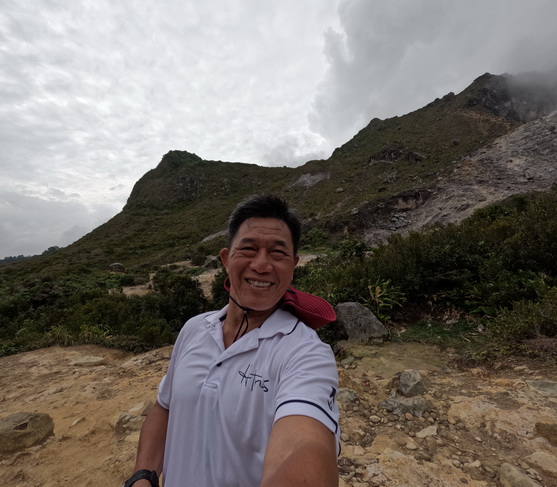
Mount Sibayak
Here is
a comprehensive guide to Mount Sibayak, covering its background, the
local community, trip planning, and its trekking trails.
Mount Sibayak (Gunung Sibayak in Indonesian)
is one of Indonesia's most accessible and popular volcanoes for
trekking. Its name "Sibayak" is derived from the Karo word for "King" or
"Ruler," reflecting its majestic presence in the region.
-
Geology and
Volcanic Nature: Sibayak
is a stratovolcano, located in the Karo Highlands of North Sumatra.
It stands at 2,172 meters (7,126 feet) above sea level. While
it's still considered active, its last significant eruption was in
1881, with minor volcanic activity recorded as recently as the
1990s. The volcano is characterized by:
-
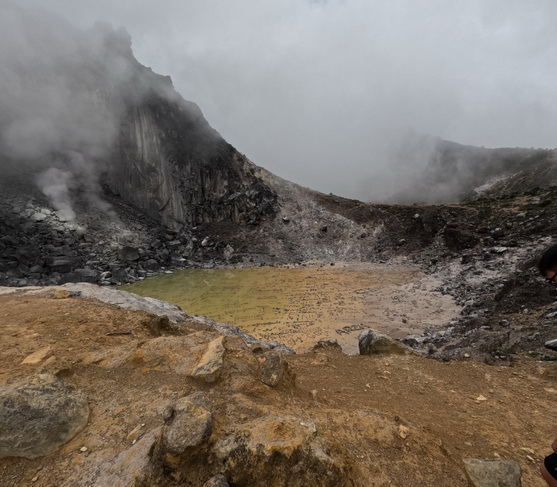
A Large
Caldera: The
main crater is a vast, steaming expanse filled with fumaroles,
sulfur vents, and colorful mineral deposits. The strong smell of
sulfur and the sight of billowing white steam against the stark
landscape are unforgettable.
-
Twin
Volcanoes: It
is often mentioned together with its "twin," Mount Sinabung,
which is a much more active and dangerous volcano located
further west.
-
Hot Springs: The
volcanic activity heats several natural hot springs in the area,
a perfect way to soothe sore muscles after a trek.
-
Significance: For
the local Karo Batak people, the mountain is of cultural and
spiritual importance. In the past, it was a site for rituals and
offerings. Today, it's a major draw for both domestic and
international tourists seeking an adventurous but manageable volcano
hike.
Who Stays Around It? The Local Community
The
area around Mount Sibayak is predominantly inhabited by the Karo
Batak people, one of the major ethnic groups in North Sumatra.
-
Karo Batak
Culture: They
are known for their rich traditions, distinctive longhouses (known
as Rumah Adat), and intricate wood carvings. The town of Berastagi is
the main gateway to Sibayak and a bustling Karo market town.
Visiting the traditional fruit and vegetable market in Berastagi is
a cultural experience in itself.
-
Villages and
Agriculture: The
fertile volcanic soil makes the region a major producer of
high-quality fruit and vegetables. You'll see vast plantations of
oranges, passion fruit, tomatoes, and cabbages on the slopes around
the mountain. The village of Semangat Gunung is located very
close to the trailhead and is a starting point for many treks.
-
Livelihood: While
agriculture is primary, many locals are now involved in tourism,
working as guides, homestay owners, or drivers.
How to Make a Trip There
1.
Getting There:
-
Base Yourself in
Berastagi: This
is the most convenient option. Berastagi has a wide range of
accommodation, from budget homestays to nicer hotels.
-
From Medan: The
journey starts from Medan, the capital of North Sumatra. You can
take public buses (about 3-4 hours) or hire a private car (about 2-3
hours) from Medan to Berastagi.
2.
Best Time to Visit:
-
The dry season
(April to October) is ideal, with clearer skies and less muddy
trails.
-
Start your hike very
early in the morning (around 5:00 AM) to avoid the midday heat,
enjoy the sunrise from the summit, and have the best chance of clear
views before clouds roll in.
3.
What to Bring:
-
Sturdy Shoes: The
trail, especially near the crater, is rocky and can be slippery.
-
Warm Clothing: It
can be chilly at the summit, especially before sunrise.
-
Rain Jacket: Weather
in the mountains is unpredictable.
-
Water & Snacks: There
are no facilities on the mountain.
-
Headlamp/Flashlight: Essential
for an early morning start.
-
Gas Mask or
Bandana: The
sulfur fumes at the crater can be very strong and irritating to the
lungs and eyes. This is highly recommended.
4.
Guide vs. Solo Trek:
-
While it's possible
to trek solo, hiring a local guide is strongly recommended,
especially for first-time visitors. Guides are inexpensive, provide
valuable insight into the mountain, ensure you take the correct
path, and enhance safety. You can easily arrange one through your
accommodation in Berastagi or at the trailhead.
The Different Trekking Trails
There
are two main routes to the summit of Mount Sibayak, often combined to
create a loop.
1.
The "Jungle Trail" (from Semangat Gunung Village)
This is
the most popular and scenic route.
-
Trailhead: Starts
from the village of Semangat Gunung, just a short ojek (motorcycle
taxi) or car ride from Berastagi.
-
Difficulty: Moderate.
It's a steady, uphill climb through beautiful tropical rainforest.
-
Duration: 2.5
- 4 hours to the summit.
-
Highlights:
-
A beautiful
hike through dense, green jungle with the sounds of nature.
-
Well-defined
path with steps and ropes in steeper sections.
-
Emerges
directly at the main sulfuric crater.
2.
The "Paved Road" / "Back Route" (from the Geothermal Plant)
This
route is steeper, less scenic, but faster.
-
Trailhead: Starts
from the PT. Supraco geothermal energy plant.
-
Difficulty: Moderate
to Strenuous. It's a relentless, steep climb on a rough paved
service road, followed by a rocky scramble.
-
Duration: 1.5
- 2.5 hours to the summit.
-
Highlights:
-
The quickest
way to the top.
-
Offers
different perspectives of the valley.
The
Classic Loop Itinerary
Most
trekers do a loop to experience both trails:
-
Ascend via the
Jungle Trail: Start
early from Semangat Gunung. Enjoy the cool, shaded climb and arrive
at the dramatic crater as the morning light hits it.
-
Explore the
Crater: Spend
time at the summit exploring the fumaroles and taking photos (with
your bandana on!).
-
Descend via the
Paved Road: Hike
down the steep road to the geothermal plant. From there, you can
walk or take an ojek back to Berastagi or to the...
-
Post-Trek
Relaxation: Visit Sibayak
Hot Springs (Air Panas Lau Debuk-Debuk) near the geothermal
plant to soak in the warm, mineral-rich waters—a perfect reward for
your efforts.
Summary of Trail Comparison
|
Feature |
Jungle Trail (Semangat Gunung) |
Paved Road (Geothermal Plant) |
|
Scenery |
Lush rainforest, more natural |
Industrial start, rocky terrain |
|
Difficulty |
Moderate, steady climb |
Strenuous, very steep |
|
Duration (Ascent) |
2.5 - 4 hours |
1.5 - 2.5 hours |
|
Crowds |
More popular |
Less crowded |
|
Best For |
A
scenic, classic hiking experience |
A
quick, challenging ascent |
A trip
to Mount Sibayak offers a perfect blend of natural adventure, geological
wonder, and cultural immersion. It's a must-do for any traveler in North
Sumatra looking for an active and memorable experience outside of the
more common Lake Toba itinerary.
How to
present the sinabung volcanic mountain - its background and its
surrounding attractions at its foothill such as st francis of asisi
Of
course. Presenting Mount Sinabung requires a different approach from
Sibayak, as it is an intensely active and often tragic volcano. It's a
story of resilience, danger, and the powerful relationship between a
community and the mountain they live beside.
|
|
Presentation:
Mount Sinabung – The Restless Giant of Karo
Introduction:
Unlike its more tranquil neighbor, Sibayak, Mount Sinabung is a
potent and ever-present reminder of nature's raw power. Presenting
Sinabung means telling a story of reawakening, resilience, and the
complex relationship between humans and their environment. It is not a
mountain for trekking, but one for observing with awe and respect from a
safe distance.
Part 1: The Background of Mount Sinabung
This
section should focus on its recent activity and impact.
1.
The Sleeping Giant That Awoke:
-
Historical
Context: For
over 400 years, Sinabung was dormant, covered in lush forests and
farmland. Locals considered it extinct. This long silence ended
dramatically in 2010, when it erupted for the first time in
recorded history.
-
A New Era of
Activity: Since
2010, Sinabung has been in a state of near-constant eruption. It has
experienced multiple major eruptive phases, including:
-
Pyroclastic
Flows: These
fast-moving currents of hot gas, ash, and volcanic rock are the
most significant hazard, racing down the slopes and incinerating
everything in their path.
-
Ash Plumes: It
frequently spews volcanic ash kilometers into the sky,
disrupting air travel and blanketing villages in a layer of grey
dust.
-
Lava Dome
Growth and Collapse: The
building and subsequent explosive collapse of the lava dome in
the crater is a primary source of its dangerous eruptions.
2.
Key Facts & Figures:
-
Type: Stratovolcano
-
Height: 2,460
meters (8,070 feet)
-
Status: EXTREMELY
ACTIVE. It is one of the most active and closely monitored
volcanoes in Indonesia.
-
The Human Cost: The
ongoing eruptions have had a devastating impact. Dozens of people
have lost their lives, and hundreds of thousands have been displaced
over the years. Vast areas of farmland and entire villages have been
buried under ash and rock.
3.
The Narrative of Resilience:
The story of Sinabung is not just about geology; it's about the Karo
Batak people who have lived on its fertile slopes for generations.
They have shown incredible resilience, dealing with repeated
evacuations, the loss of their homes and livelihoods, and an uncertain
future. Many still live in temporary shelters, unable to return to the
high-risk "Red Zone."
Part 2: Surrounding Attractions at its Foothills
The
"attractions" here are not typical tourist spots. They are poignant
landmarks that tell the story of Sinabung's power and the community's
faith.
1.
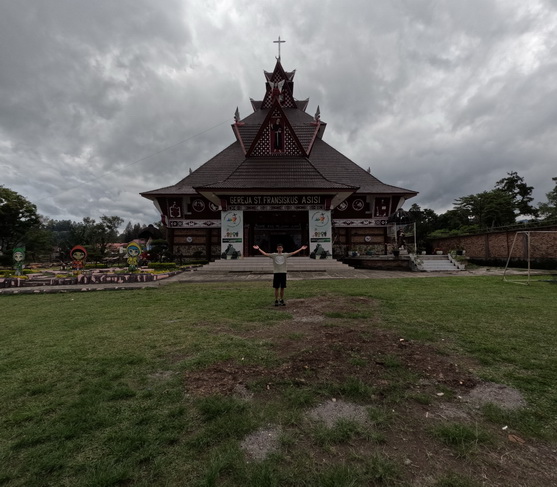
The Church of St. Francis of Assisi (Gereja Santo Fransiskus Asisi),
Simacem
This is
the most iconic and haunting image associated with Mount Sinabung.
-
The Scene: A
small, white Catholic church standing alone in a vast, grey,
desolate landscape of ash and volcanic debris. In the background,
the perfect, menacing cone of Sinabung looms. The contrast is
breathtaking and sobering.
-
The Story: The
village of Simacem was directly in the path of a massive pyroclastic
flow. The church was miraculously spared complete destruction,
while almost every other structure in the village was wiped off the
map. It now stands as a solitary monument to the cataclysm.
-
What to
Experience There:
-
A Symbol of
Faith and Survival: For
many, the church represents divine protection and the enduring
spirit of the community.
-
A Stark
Warning: It
serves as a powerful, visual testament to the volcano's
destructive force and the importance of respecting exclusion
zones.
-
Photography: It
is an incredibly photogenic site, but visitors must approach it
with respect and solemnity, remembering the lives lost and
disrupted.
2.
Other Foothill Attractions & Viewpoints
-
Traditional Karo
Villages (Outside the Danger Zone): Visit
villages like Lingga or Peceren to experience
authentic Karo Batak culture, including their famous longhouses (Rumah
Adat). This provides context for what is at stake and the rich
culture that exists in Sinabung's shadow.
-
Viewpoints from
Berastagi: The
town of Berastagi itself offers spectacular and safe views of
Sinabung, especially in the early morning when the peak is often
clear.
-
The "Ghost
Villages": The
abandoned villages closer to the mountain, accessible only with
special permission and a guide, are eerie reminders of the volcano's
impact. They are not for casual tourism but for educational and
documentary purposes.
How to Present This Information Effectively
-
Start with the
Contrast: Begin
by comparing Sinabung to the more approachable Sibayak to
immediately establish its unique and dangerous character.
-
Use Powerful
Visuals: The
presentation must include photos and videos.
-
Time-lapses of
eruptions and pyroclastic flows.
-
Before-and-after satellite images of affected areas.
-
Close-up photos
of the St. Francis Church in its devastated surroundings.
-
Focus on the
Human Story: Weave
in interviews or quotes from displaced residents, volcanologists,
and local guides. This adds emotional depth and prevents the
presentation from being just a geological report.
-
Emphasize
Safety: Constantly
reiterate that trekking on Sinabung is strictly forbidden and
extremely deadly. The only way to experience it is from
designated, safe viewpoints.
-
Structure it as
a Narrative: Frame
it as a three-act story: The Peaceful Past (pre-2010) -> The Sudden
Awakening (2010 eruptions) -> The New Reality (living with an active
volcano).
By
presenting Mount Sinabung in this way, you honor both the scientific
reality of the volcano and the profound human drama that continues to
unfold at its feet. The Church of St. Francis is not just a building; it
is the central character in this ongoing story.
Please
tell me about the burial culture of the Batak people in samosir island
and please highlight the locations TuK Tuk and Tomok and what are they
famous for
Of
course! The burial culture of the Batak people on Samosir Island is one
of the most fascinating and visually striking in Indonesia, blending
ancient animist beliefs with Christian traditions. The villages of Tuk
Tuk and Tomok are central to experiencing this unique
heritage.
Here is
a detailed look at Batak burial culture, highlighting these two
important locations.
The Batak Burial Culture: A Blend of the Physical and Spiritual
For the
Batak, death is not an end but a transition. The elaborate burial
rituals and monuments are designed to ensure the safe passage of the
soul (begu) to the spirit world of the ancestors, while also
cementing the social status of the family left behind.
Key
elements of traditional Batak Toba culture (the specific ethnic group on
Samosir) include:
-
The Ancestral
Village (Huta): A
person must ideally be buried in their ancestral village, no matter
where they die. This reinforces their connection to their clan (marga).
-
Secondary Burial
(Mangongkal Holi): This
is the most important ritual. Initially, a person might be buried
temporarily. Years later, their bones are exhumed in a grand
ceremony and re-interred in a permanent, grand sarcophagus. This
ceremony is incredibly expensive and can take families decades to
save for.
-
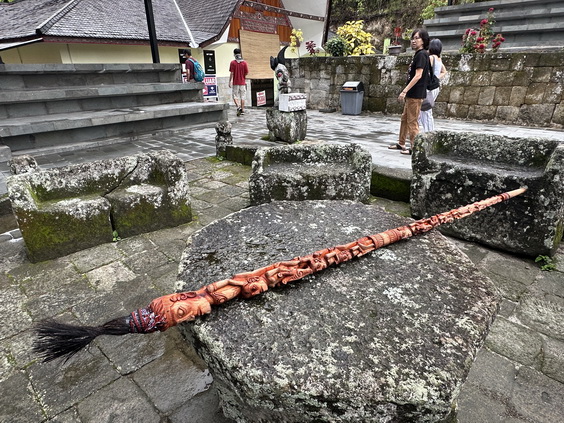
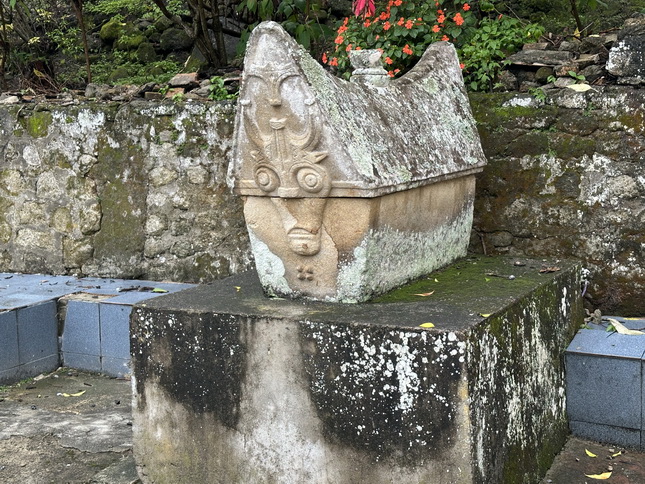
The Stone
Sarcophagus (Tugu or Batu Persidangan): This
is the iconic stone tomb, often described as a "mini-house" for the
deceased.
-
The Wooden
Effigies (Sigale-gale): While
not a burial practice per se, these life-sized wooden puppets were
traditionally used in rituals to honor a deceased person who died
without an heir, to appease their restless spirit.
Highlighting the Locations: Tomok and Tuk
Tuk
While
both are on the Samosir Peninsula, they serve different but
complementary roles for visitors.
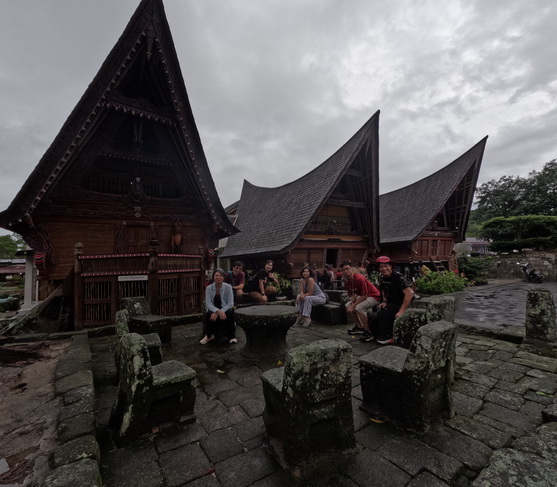
Tomok: The Ancient Royal Burial Ground
What
Tomok is Famous For:
Tomok is arguably the most famous site on Samosir to see ancient and
majestic Batak stone graves. It is an ancient royal village, and the
burial site of King Sidabutar and his descendants.
Key
Sites and What You'll See in Tomok:
-
The Sidabutar
Royal Tombs: This
is the main attraction. You will find a cluster of ornately carved
stone sarcophagi in a shaded courtyard.
-
The Tombs: The
tombs are carved from single blocks of stone. The oldest one
belongs to King Sidabutar, who converted to Christianity in the
19th century. You can see his likeness carved into the stone,
along with pre-Christian symbols like the singa (a
mythical lion-buffalo creature) and carvings of the boraspati (a
gecko/lizard), a symbol of immortality.
-
A Blend of
Beliefs: The
tombs beautifully illustrate the fusion of animist traditions
(the carvings) with Christianity (the cross on the tombs).
-
Ritual
Significance: Locals
still show respect here. You may be asked to wear a ulos (a
traditional Batak cloth) around your waist as a sign of respect
when viewing the tombs.
-
Atmosphere: Tomok
has a more "historical site" feel. It's a place of quiet reverence
and awe, where you are walking among the ancient graves of kings.
Tuk
Tuk: The Living Culture and Modern Center
What
Tuk Tuk is Famous For:
Tuk Tuk is not famous for ancient royal tombs like Tomok. Instead, it is
the main tourist hub on Samosir—a peninsula with numerous guesthouses,
hotels, and restaurants. Its importance lies in how it provides access
to and context for Batak culture.
Key
Aspects of Tuk Tuk Related to Burial Culture:
-
A Living
Cemetery: Walk
or cycle around the villages on the Tuk Tuk peninsula, and you will
see modern-day tugu in the yards of family homes, next
to churches, and along the roadsides. This shows that the burial
tradition is not a relic of the past but a living, ongoing practice.
-
Cultural Shows: Many
hotels in Tuk Tuk host evening performances of traditional Batak
dance and music, including the Sigale-gale puppet dance.
Seeing this performance helps visitors understand the spiritual
context surrounding death and ancestry in Batak culture.
-
Base for
Exploration: Tuk
Tuk is the perfect base from which to hire a scooter or a guide to
visit Tomok (which is just a 10-15 minute drive away) and other
important burial sites across Samosir, like the stone chairs at
Ambarita.
-
Comparison at a Glance
|
Feature |
Tomok |
Tuk Tuk |
|
Primary Fame |
Ancient Royal Burial Site (Sidabutar
Tombs) |
Tourist Hub & Living Culture |
|
Burial Focus |
Historical, majestic tombs from the 19th century. A specific,
curated site. |
Modern, everyday tombs integrated into the community. |
|
Visitor Experience |
A
short, focused visit to a specific historical cemetery. Feels
like a museum. |
An immersive experience; seeing tombs as part of daily life. |
|
Key Takeaway |
See how Batak royalty were buried in the past. |
See how ordinary Batak people practice burial culture
today. |
Summary
To
truly understand Batak burial culture on Samosir Island, you need to
visit both Tomok and Tuk Tuk.
-
Go to Tomok to
witness the grandeur and history of the tradition at the magnificent
Sidabutar royal tombs.
-
Stay in Tuk Tuk to
see how this tradition continues to thrive today, with modern stone
graves dotting the landscape, and to enjoy cultural performances
that bring the stories and beliefs behind the graves to life.
Together, they offer a complete and profound picture of a culture that
maintains a powerful and visible link with its ancestors.
Can you
give me a running route around Aiho Hotel medan in medan Indonesia ( ex
Radisson Hotel) -any interesting attractions
Of
course! A run around the area of the Aiho Hotel (formerly the Radisson)
in Medan is a great way to see a mix of the city's history, local life,
and modern development. The area is quite central, so you can craft a
route that packs a lot in.
|
|
The "Medan Heritage & River"
Run
This
route is approximately 4-5 km long, making it a perfect 30-45
minute run, depending on your pace and how long you stop to look at
things.
Route Overview: Aiho
Hotel → Titi Gantung → Sri Deli Bridge → Jalan Sisingamangaraja →
Lapangan Merdeka (Merdeka Square) → Return to Aiho Hotel.
Step-by-Step Guide & Attractions
1.
Start: Aiho Hotel
-
Begin on the main
road, Jalan Balaikota. The hotel is right next to the Mayor's
office, so the area is well-maintained.
2.
Head North to Titi Gantung (The Hanging Bridge) - ~0.7 km
-
Run north along
Jalan Balaikota until you hit the river (Sungai Babura). You'll see
a unique, old pedestrian bridge. This is Titi Gantung, a
historic steel truss bridge from the Dutch colonial era. It's a
great photo spot and a tangible piece of Medan's history.
-
Attraction: Titi
Gantung. Cross the bridge and feel the history. You'll get a
good view of the river and the city life on both banks.
3.
East along the River to Sri Deli Bridge - ~0.5 km
-
After crossing Titi
Gantung, turn right (east) and run along the pedestrian path on the
north side of the river. This path is part of a city revitalization
project and is popular with walkers and runners in the early morning
and late afternoon.
-
You'll run
underneath the modern flyover and continue until you reach the Sri
Deli Bridge, a large, green painted bridge.
4.
Cross the Sri Deli Bridge & Enter the Main Hub - ~0.5 km
-
Cross the Sri Deli
Bridge to the south side of the river. You are now on Jalan
Diponegoro, a major commercial street.
5.
Run West to Lapangan Merdeka (Merdeka Square) - ~1.0 km
-
Turn left (west)
onto Jalan Diponegoro. Continue straight, and you will soon see the
vast, open space of Lapangan Merdeka (Merdeka Square) on your
right. This is the city's central square.
-
Attractions:
-
Lapangan
Merdeka: A
huge field where locals exercise, play sports, and relax.
Running on the perimeter path is a classic Medan experience.
-
Istana
Maimun (Maimun Palace): Just
a 2-minute detour south from the square! This is the royal
palace of the Deli Sultanate and one of Medan's most iconic
landmarks. Its stunning yellow color and unique Malay-Islamic-Mughal
architecture are breathtaking. (You can decide to loop it into
your run or visit after).
-
Great Mosque
of Medan (Masjid Raya Al-Mashun): Also
a short detour to the west of the square. Another magnificent
historical mosque from the Sultanate era.
6.
Final Stretch Back to Aiho Hotel - ~1.0 km
-
From the western
side of Lapangan Merdeka, head north on Jalan Balai Kota or a
parallel side street. You'll pass various government buildings and
shops.
-
This will lead you
directly back to the Aiho Hotel, completing your loop.
Route Map & Customization
-
View the Route: You
can input these landmarks into Google Maps to visualize the loop: Aiho
Hotel -> Titi Gantung -> Sri Deli Bridge -> Lapangan Merdeka -> Aiho
Hotel.
-
Shorter Option
(~3 km): Skip
the Lapangan Merdeka loop. After crossing the Sri Deli Bridge,
simply turn right and run back towards the Aiho Hotel along Jalan
Balaikota.
-
Longer Option
(~6-7 km): Do
a full lap or two around the perimeter of Lapangan Merdeka. You can
also add an out-and-back section further west past the Great Mosque.
Important Running Tips for Medan
-
Best Time to
Run: Early
morning (6:00 AM - 7:30 AM) is ideal. The weather is cooler, the
air quality is better, and the city is not yet fully awake, meaning
less traffic and pedestrians. Late afternoon (after 5:00 PM) is also
popular, especially at Lapangan Merdeka.
-
Be Mindful of
Traffic: Sidewalks
can be inconsistent, with sudden obstacles or being used for
parking. Always be alert. When crossing streets, be assertive but
cautious.
-
Hydration: It
will be hot and humid. Consider carrying a small water bottle or
plan to buy a drink from a roadside stall (warung) along the
way.
-
What to Wear: Lightweight,
breathable running gear is essential.
-
Air Quality: Medan
can have variable air quality. If you are sensitive, the early
morning is your best bet.
This
route gives you a fantastic sampler of Medan's character, from its
colonial past to its vibrant present. Enjoy your run
WHERE
IS THE NEAREST PARK TO AIHO HOTEL MEDAN
Of
course! The nearest and most significant park to the Aiho Hotel Medan
is Lapangan Merdeka (Merdeka Square).
It is a
very short and direct run or walk from the hotel.
Lapangan Merdeka (Merdeka Square)
-
Distance from
Aiho Hotel: Approximately 600
meters (about 0.4 miles).
-
Walking/Running
Time: A
direct route takes 7-10 minutes on foot.
How to Get There from Aiho Hotel:
-
Head west on Jalan
Balai Kota, the main road the hotel is on.
-
Continue straight.
You will pass the Mayor's Office on your left.
-
In just a few
minutes, you will see the vast, open green field on your right. This
is Lapangan Merdeka.
It's an
unmissable landmark.
What to Expect at Lapangan Merdeka:
This is
the central square and primary green lung of Medan. It's not a park with
playgrounds in the Western sense, but a massive public field surrounded
by a track. It's extremely popular for exercise and socializing.
-
Running Track: The
perimeter of the field has a dedicated, well-maintained running
and walking track. It's perfect for a proper run without
worrying about traffic. One lap is approximately 1 km.
-
Atmosphere: Especially
in the early morning (5:30 AM - 8:00 AM) and late
afternoon (after 5:00 PM), the square is buzzing with activity.
You'll find hundreds of people:
-
Jogging and
running
-
Walking
-
Doing group
calisthenics or aerobics
-
Playing casual
soccer and other sports
-
Socializing and
enjoying street food from vendors
-
Landmarks: The
square is surrounded by important historical and government
buildings, making the scenery architecturally interesting.
Other Green Spaces Slightly Farther:
If
you're looking for a more garden-like park, the next closest option is Taman
Ahmad Yani.
-
Taman Ahmad Yani
-
Distance: About 1.3
km from Aiho Hotel.
-
Description: This
is a more traditional city park with landscaped areas, benches,
and shade. It's a pleasant place for a stroll or a short rest,
but it's much smaller and doesn't have a dedicated running track
like Lapangan Merdeka.
Summary & Recommendation
For a
runner staying at the Aiho Hotel, Lapangan Merdeka is unequivocally
your best and nearest option.
-
For a serious
run: Go
to Lapangan Merdeka and do laps on the track.
-
For a more
scenic, point-to-point run: Use
the route I provided in the previous answer, which incorporates
Lapangan Merdeka, the river path, and the historic bridges.
Tip: Always
go early in the morning to enjoy the coolest temperatures and the most
vibrant atmosphere with the local fitness community.
Help me
plan a running route around Labersa Hotel & Convention Center Samosir
Of
course! Planning a running route around the Labersa Hotel & Convention
Center on Samosir Island is a fantastic idea. You're in for a treat, as
this area offers some of the most stunning lakeside and cultural running
scenery in Indonesia.
The key
thing to know about running here is that it's all about the Jalan
Lingkar Danau Toba (the road that circles the island). The terrain
is hilly, the views are breathtaking, and you'll share the road with
motorbikes and occasional cars.
Here
are a few running routes planned from the Labersa Hotel, catering to
different distances and difficulty levels.
Route 1: The Classic Lakeside Out-and-Back (Easy to Moderate)
This is
the simplest and most highly recommended route for a first run, offering
non-stop panoramic views.
-
Distance: 5
km to 8 km (easily customizable)
-
Elevation: Rolling
hills, with a significant climb on the return if you go north.
-
Terrain: Paved
road, wide shoulders in most parts.
-
Best Time: Sunrise.
You'll get the best light over the lake and calm conditions.
Route Description:
-
Start: Exit
Labersa Hotel and turn left onto Jalan Lingkar Danau Toba (the
main lake-facing road).
-
Decision Point: You
can go either North (left) or South (right). Both are
beautiful.
-
Recommended:
South (Right Turn)
-
This
direction generally has a gentler grade and more consistent
lakeside views right from the start.
-
You'll pass
local houses, small docks, and fishing boats.
-
Run out for
2.5 km to 4 km, using a landmark like a specific guesthouse
or a notable tree as your turnaround point.
-
The return
trip gives you a different but equally spectacular
perspective of the lake and mountains.
-
Alternative:
North (Left Turn)
-
This
direction involves a more immediate climb away from the
hotel, but rewards you with higher vantage points.
-
You'll get
a fantastic aerial view of the Labersa hotel cove after
about 1 km.
Highlights:
-
Uninterrupted views
of Lake Toba and the surrounding caldera.
-
Glimpses into local
Batak daily life.
-
Fresh, cool
mountain air.
-
Peaceful and
meditative.
Route 2: The Cultural Loop (Moderate)
A
longer route that combines lakeside running with a pass by a major
cultural site.
-
Distance: ~10
km
-
Elevation: Significant
hills, especially on the return leg.
-
Terrain: Paved
road.
Route Description:
-
Start: Exit
Labersa Hotel and turn LEFT (North) onto Jalan Lingkar Danau
Toba.
-
The Climb: Begin
the steady climb for about 2.5 km. Embrace the burn and use it as an
excuse to stop for photos.
-
Cultural Detour: After
approximately 3.5 km, you will approach the main town of Tuk Tuk.
Keep an eye out for the Museum Huta Bolon Simanindo and the Bagus
Bay Gallery area. This is the heart of the Tuk Tuk peninsula,
with many hotels, cafes, and traditional Batak houses.
-
The Loop: Instead
of turning around, continue following the road as it curves around
the tip of the Tuk Tuk peninsula. You are now running along the
eastern side.
-
The Return: Continue
south on Jalan Lingkar Danau Toba. This section is quieter and
offers new lake views. You will eventually see the signs for Labersa
Hotel on your right, completing the loop.
Highlights:
-
Passing by
traditional Batak Toba houses with their iconic curved roofs.
-
Experiencing the
vibrant tourist and local hub of Tuk Tuk.
-
A 360-degree
perspective of the Tuk Tuk peninsula.
Route 3: The Hill Challenge (Hard)
For the
runner seeking a serious workout and the highest rewards.
-
Distance: 8
km to 15 km+
-
Elevation: Major,
sustained climbing.
-
Terrain: Paved
road.
Route Description:
-
Start: Exit
the hotel and turn LEFT (North).
-
The Ascent: Commit
to the climb. The road will wind upwards, taking you high above the
lake. The climb is relentless for the first 3-4 km.
-
Turnaround
Point: Choose
your own adventure. You can turn around at a specific distance
(e.g., 4 km out) or at a notable viewpoint where you can see the
entire Tuk Tuk peninsula laid out below you.
-
The Reward: The
return trip is a fast, quad-pounding descent with breathtaking
vistas the entire way down.
Highlights:
-
Incredible aerial
and panoramic views of Lake Toba.
-
A sense of major
accomplishment.
-
A fantastic,
challenging hill workout.
Important Running Tips for Samosir Island:
-
Best Time to
Run: Sunrise
(6:00 - 7:30 AM) is absolutely magical. The light is perfect,
the air is cool, and traffic is minimal. Late afternoon (after 4:00
PM) is also good, but you might encounter more motorbikes.
-
Safety First:
-
Traffic: Always
run facing oncoming traffic (on the right side of the
road in Indonesia). This gives you the best chance to see
vehicles and be seen.
-
Visibility: Wear
bright or reflective clothing, especially in the early morning
or late evening.
-
Road
Conditions: Be
aware that the road can have uneven surfaces, gravel, and
occasional dogs. Stay alert.
-
Hydration &
Nutrition: There
are small shops (warungs) along the road in the Tuk Tuk area,
but it's best to carry your own water, especially on longer runs.
-
Weather: The
weather can change quickly. It can be cool and misty in the morning,
then sunny and warm later. Be prepared for sun and potential rain.
-
Take it All In: This
is not a place for personal bests. It's a place for experiential
running. Don't hesitate to stop, take photos, and soak in the
incredible scenery.
Enjoy
your run! The combination of physical exertion and the awe-inspiring
beauty of Lake Toba is an experience you won't forget.
|
|
The
Batak people that
live on Samosir Island - what are beliefs and culture and way of
life - is it changing for the young people
Of
course! The Batak people of Samosir Island are one of the most
culturally distinct and fascinating groups in Indonesia. Their homeland,
Samosir, is not just a geographical location but the very heartland of
Batak Toba culture, sitting like a jewel in the middle of the vast Lake
Toba.
Here’s
a detailed look at their beliefs, culture, way of life, and how it's
changing for the younger generation.
Core Beliefs: A Blend of Ancient and Modern
Traditionally, the Batak people were animists, believing that spirits
inhabited everything: rocks, trees, rivers, and ancestors. Their core
pre-Christian belief system can be summarized as:
-
Debata Mulajadi Na Bolon: The
supreme, omnipotent god.
However, this deity
was distant, so daily life was more concerned with intermediary
spirits.
-
The Spirit
World: This
was divided into two main categories:
-
Begu: These
were the spirits of the dead, which could be benevolent or
malevolent depending on how they were treated. Ancestor spirits
(begu) were particularly important and needed to be
honored with rituals.
-
Sombaon: Territorial
spirits that guarded villages, forests, and mountains. Offerings
were made to appease them.
-
The Role of the Datu (Shaman): The Datu was
a crucial figure—a priest, healer, and soothsayer. He communicated
with the spirit world, performed rituals (mangarusi), and
used a sacred book called the Pustaha (written on tree bark
in the ancient Batak script) for magic and medicine.
Today, the
overwhelming majority of Batak people on Samosir are Christian (mostly
Protestant, with some Catholic). This conversion happened largely in the
late 19th and early 20th centuries. However, the old beliefs have not
disappeared; they have syncretized with Christianity.
-
Syncretism in
Practice: You'll
see this in the way traditional rituals are conducted. A Christian
pastor will often lead a prayer, but the structure, symbols, and
some invocations of the ritual are deeply traditional. For example,
the concept of sahala (spiritual power or charisma) is still
respected.
-
Pangulubalang (family
guardian spirits) and ancient burial sites are still treated with
reverence.
Culture and Way of Life
1. Marga (Clan
System)
This is
the absolute bedrock of Batak social identity. Every Batak person
belongs to a marga (surname/clan) inherited from their father.
Your marga dictates your social relationships, who you can marry,
and your place in the community.
-
Dalian Na Tolu
(The Three Hearthstones): This
is the core philosophy of social organization. It refers to the
three primary clans in any given social situation and their
reciprocal obligations:
-
Kahanggi (Your
own clan brothers).
-
Anak Boru (The
clan of your son's wife / your female relatives' husbands). They
have specific duties in rituals.
-
Boru (The
clan of your wife / your male relatives' wives).
-
Marriage Rules: The
most famous rule is that you cannot marry someone from the same marga.
Furthermore, marriage is often seen as an alliance between clans.
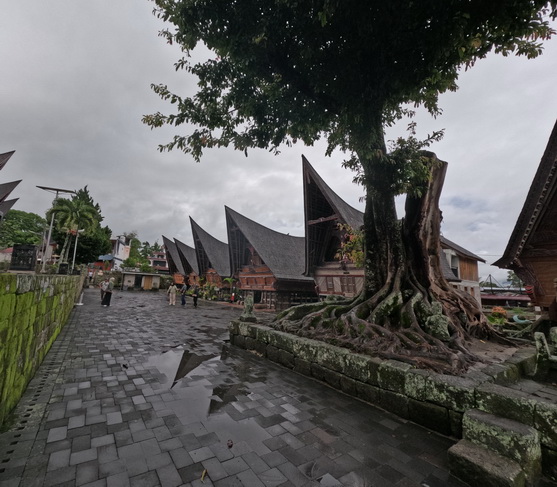
2. Ruma
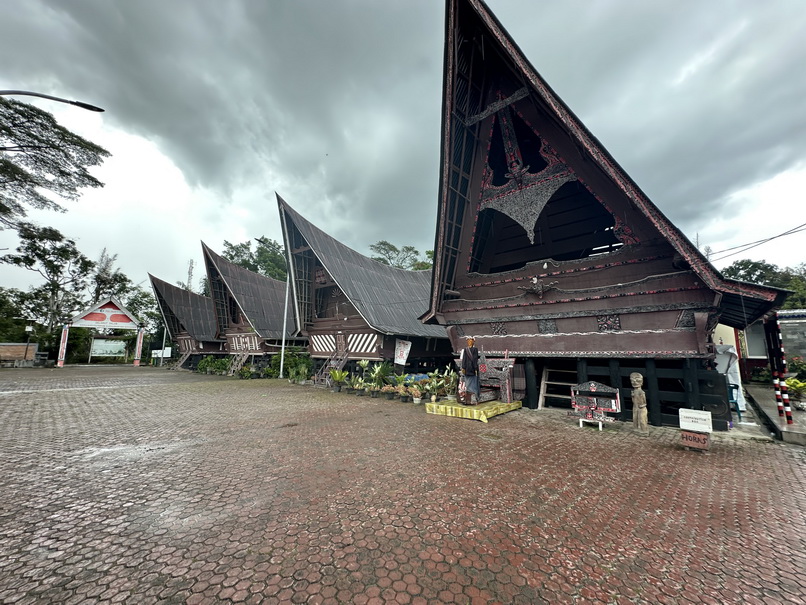
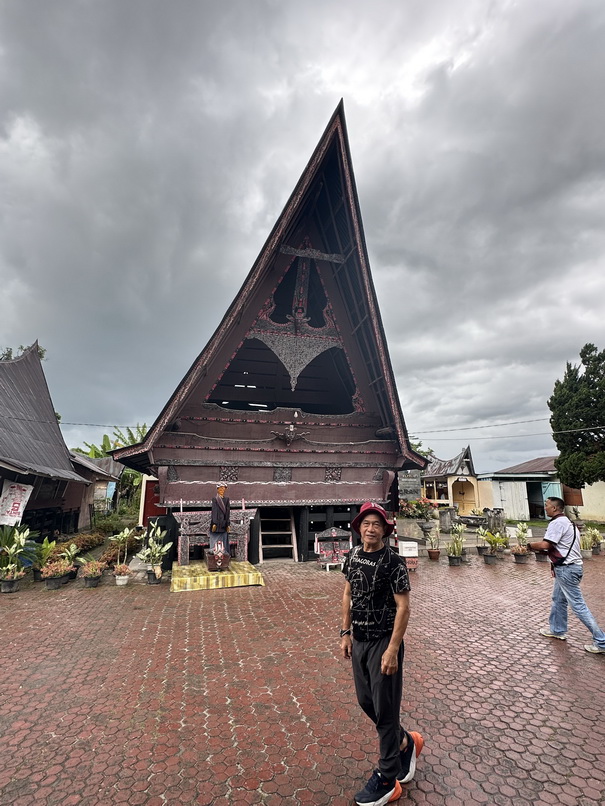
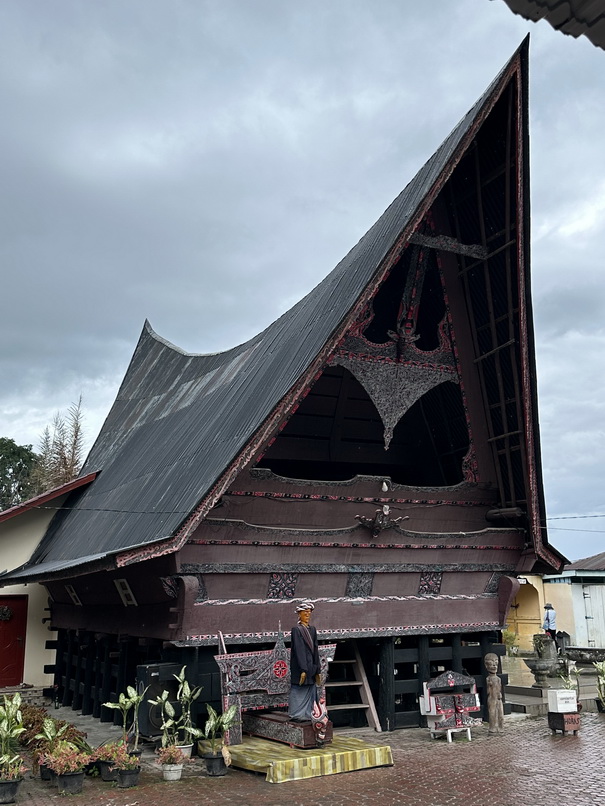
Batak (Traditional House)
The
iconic boat-shaped houses with soaring, intricately carved roofs are
more than just homes; they are symbols of the cosmos and clan identity.
-
Symbolism: The
three levels represent the underworld (where animals are kept), the
human world (the living space), and the upper world (the roof,
representing the realm of the gods and ancestors).
-
Social Function: A ruma
batak belongs to a clan, not just a nuclear family. It's the
venue for important clan meetings and rituals.
3. Ulos (Traditional
Woven Fabric)
The ulos is
not merely a piece of cloth; it is a sacred object imbued with blessing
(hagabeon).
-
It is given at key
life events: birth, marriage, and death.
-
Specific types of ulos are
given for specific occasions (e.g., Ulos Ragidup for the most
solemn ceremonies).
-
Receiving an ulos from
an elder is to receive their blessing and protection.
4.
Music and Dance
-
Gondang Music: The
traditional ensemble, featuring drums (taganing), gongs, and
a flute (suling). It is essential for all ceremonies and
rituals. The music is not for entertainment alone; it calls the
spirits and opens the ceremony.
-
Tor-Tor Dance: This
is a sacred dance performed to the gondang. Every movement
has meaning, and it is a medium of communication with the ancestral
spirits. There are different tor-tor for different occasions.
5.
Traditional Economy
Traditionally, the Batak on Samosir were farmers (parhosa)
cultivating rice, coffee, and vegetables, and fishermen (parhapor)
on Lake Toba. They are also renowned as traders and have a strong
entrepreneurial spirit.
Is It Changing for the Young People? Yes, Dramatically.
The
culture is dynamic, and the forces of globalization, education, and mass
media are having a profound impact on the younger generation.
1.
Religion and Beliefs
-
Young Batak are
almost universally devout Christians in a modern, less syncretic
sense. They may see the older animistic practices as superstition
rather than religion.
-
Their connection to
the Datu and the intricate spirit world is much weaker than
that of their grandparents.
2.
The Marga System
-
Still Strong,
But Changing: The marga remains
a powerful source of identity. You will always be asked your marga when
meeting another Batak.
-
Dating and
Marriage: The
rule against same-marga marriage is still strictly followed.
However, the strict expectations of marrying within the Batak
ethnicity are softening, especially for those who move to cities
like Medan or Jakarta. Inter-ethnic marriages are becoming more
common, though they can still cause family tension.
-
Weakening of Dalian
Na Tolu: The
intricate roles and responsibilities of the anak boru and boru are
not as deeply understood or as rigorously practiced by the youth
living in urban areas.
3.
Language
-
While the Batak
language is still spoken at home on Samosir, there is a noticeable
shift towards Indonesian, especially among children. The deep,
poetic, and often formal language of traditional rituals (hata
Batak) is known by fewer and fewer young people.
4.
Livelihood and Aspirations
-
Tourism is now a
major economic driver on Samosir. Many young people work in hotels,
restaurants, or as tour guides rather than in farming or fishing.
-
Education is highly
valued. Young Batak aspire to go to university on the mainland
(Medan, Java) and pursue careers in professions like engineering,
law, and business, continuing their people's entrepreneurial
tradition but in a modern context.
5.
Culture as a Commodity
-
For tourists, Tor-Tor and Gondang are
performed daily as entertainment. For the youth performing them, it
can sometimes feel more like a job than a sacred rite. This creates
a duality where the form of the culture is preserved, but the
deep spiritual meaning can be diluted.
Conclusion: A Living, Evolving Culture
The
Batak culture on Samosir Island is not a museum piece. It is a resilient
and adaptive culture navigating the 21st century.
-
For the older
generation, the
beliefs, the marga, and the rituals are a complete,
integrated way of life.
-
For the young
generation, these
elements are often components of a cultural identity rather
than a daily spiritual guide. They are proud to be Batak, they know
their marga, and they will participate in major rituals, but
they are also Indonesian citizens and global citizens.
The
challenge and the reality for the young Batak people is to find a
balance—honoring a rich and powerful heritage while building a life in a
rapidly modernizing world. The core, the marga, will likely hold
fast, even as the expressions of what it means to be Batak continue to
evolve.
|
|
|
|
Who is
instrumental to convert the Batak people to christianity
Excellent question. The conversion of the Batak people to Christianity
is a fascinating story, and it is overwhelmingly credited to the work
of one specific missionary organization and a few key individuals within
it.
The
most instrumental figure is Ludwig Ingwer Nommensen of the Rheinische
Missionsgesellschaft (Rhenish Missionary Society).
Here’s
a breakdown of the key players and why they were so successful.
1. Ludwig Ingwer Nommensen
(1834-1918) - The Apostle to the Batak
Nommensen is the central, heroic figure in this story. His success can
be attributed to several key factors:
-
Persistence and
Resilience: He
arrived in the Batak lands in 1864, a time when they were known for
their fierceness and cannibalism (which was part of ritual practice,
not for sustenance). Previous missionaries had been killed. He
himself faced immense danger, illness, and opposition but never gave
up.
-
Cultural
Adaptation & Strategy: Instead
of trying to completely erase Batak culture, he employed a brilliant
strategy of "fulfillment theology." He presented Christianity
not as a foreign imposition, but as the fulfillment of the
best aspects of their own indigenous beliefs.
-
He identified Debata
Mulajadi Na Bolon (the supreme Batak god) with the Christian
God. This provided a familiar theological entry point.
-
He used Batak
musical traditions and translated hymns into the local language.
-
He focused on
learning the language and customs deeply, earning respect.
-
Political Savvy: Nommensen
skillfully navigated the complex political landscape. He gained the
trust and protection of a powerful Batak chief, King
Sisingamangaraja XII (though the King himself never converted,
he saw Nommensen as a potential ally against the Dutch). Later, he
also managed relations with the Dutch colonial government, using
their presence to create safer conditions for his converts.
-
Building a
Native Church: He
focused on training Batak assistants and pastors from the very
beginning. This ensured that the church could become self-sufficient
and grow with deep local roots, rather than remaining a foreign
mission.
Because
of his work, the Huria Kristen Batak Protestan (HKBP), or the
Batak Christian Protestant Church, was established. It is now one of the
largest Protestant denominations in Indonesia, a direct legacy of
Nommensen. He is buried in Sigumpar, near Tarutung on the mainland, a
site now of pilgrimage.
2. The Rheinische
Missionsgesellschaft (Rhenish Missionary Society)
Nommensen did not operate alone. He was part of this German missionary
society, which provided the institutional backing, funding, and
personnel. Other missionaries from this society, like Hermann
Friedrich Kohlbrugge and Johannes Warneck, also played
significant roles in consolidating the work and developing theology and
education.
3. The Pioneers (Who Failed, But Paved the Way)
It's
important to note that Nommensen was not the first to try:
-
Henry Lyman and
Samuel Munson (American Board of Commissioners for Foreign
Missions): These
two American missionaries were the very first to attempt to reach
the Batak inland in 1834. Tragically, they were killed and
cannibalized in the Silindung Valley (the very area where Nommensen
would later succeed). Their martyrdom initially deterred further
missions but also highlighted the challenge.
-
Herman
Neubronner van der Tuuk: A
brilliant Dutch linguist, he was not a missionary but worked for the
Netherlands Bible Society. In the 1850s, he created the first
definitive grammar and dictionary of the Batak language. This
linguistic work was incredibly instrumental as it provided
Nommensen and others with the tools to translate the Bible and
communicate effectively.
Why Did Christianity Ultimately Succeed?
The
conversion wasn't just due to charismatic preachers. It succeeded
because it addressed specific needs and historical circumstances:
-
Social
Acceptance: Conversion
offered a way out of the rigid social hierarchy for lower-status
individuals and slaves (hatoban). The Christian message of
equality before God was powerfully attractive to them.
-
Literacy and
Education: The
missions established schools. Learning to read and write was a
powerful new skill that attracted many Batak, offering new
opportunities and social mobility.
-
Protection from
Colonization: As
the Dutch expanded their control, many Batak chiefs saw aligning
with the missionaries as a way to gain a powerful ally and navigate
the new colonial reality.
-
A Robust
Theological Bridge: As
mentioned, Nommensen's strategy of identifying the Christian God
with the pre-existing high god made the transition less culturally
disruptive than it might have been.
In
summary, while several individuals played a role, Ludwig Ingwer
Nommensen is rightly celebrated as the most instrumental figure. His
unique combination of personal courage, cultural intelligence, and
strategic thinking allowed him to plant a form of Christianity that was
not just tolerated by the Batak, but ultimately embraced and made their
own, leading to the vibrant HKBP church you see on Samosir Island today.
|
|
Presentation: Medan - Where Urban Pulse Meets Natural Majesty
Presenter Notes: Speak
clearly and with enthusiasm. Use the notes below as a guide for what to
say for each slide. Encourage questions at the end.
Slide 1: Title Slide
(Background: A vibrant collage featuring the Maimun Palace, a bowl of
Soto Medan, and the lush greenery of Lake Toba)
-
Title: Medan,
Sumatra: A Tale of Two Worlds
-
Subtitle: Discover
the Royal City Walk & The Wild Outdoor Trek
-
Your
Name/Presenter
What
to say: "Good
morning/afternoon, everyone! Today, we're journeying to the vibrant
gateway of Sumatra: Medan. We'll explore how this city masterfully
blends a rich, historical urban center with some of the most
breathtaking outdoor adventures right on its doorstep."
Slide 2: Agenda
-
Part 1: The
Urban Heartbeat - Medan City Walk
-
Colonial
History & Royal Legacy
-
Culinary
Delights
-
Cultural &
Religious Harmony
-
Part 2: The Wild
Escape - Outdoor Adventures
-
Jungle Trekking
& Wildlife
-
The Majestic
Lake Toba
-
Highland
Retreats in Berastagi
-
Practical Tips &
Conclusion
What
to say: "To
guide our tour, we'll first immerse ourselves in the sights, sounds, and
tastes of Medan City. Then, we'll venture out into the wild, exploring
the jungles, volcanoes, and serene highlands that make this region so
unique."
PART 1: THE URBAN HEARTBEAT - MEDAN CITY WALK
Slide 3: A Walk Through History
(Images: Maimun Palace, Tjong A Fie Mansion, Medan Post Office)
-
Maimun Palace: The
iconic royal palace of the Deli Sultanate. A blend of Malay, Mughal,
and Spanish architecture. A living piece of history.
-
Tjong A Fie
Mansion: A
testament to Medan's Chinese heritage and its prosperous past. The
mansion tells the story of a influential merchant and community
leader.
-
Medan Post
Office & Merdeka Walk: Stroll
past colonial-era buildings around Merdeka Field, feeling the
old-world charm transition into a modern culinary square at night.
What
to say: "Our
city walk begins with history. The Maimun Palace, with its vibrant
yellow color, is a must-see. Just a short walk away, the Tjong A Fie
Mansion offers a glimpse into the life of a key figure in Medan's
development. The architecture alone is a storybook."
Slide 4: A Feast for the Senses: Medan's Culinary Scene
(Images: A bustling sate stall, a bowl of Soto Medan, a
glass of es teler)
-
Soto Medan: A
rich, aromatic chicken soup with a creamy, coconut milk-based broth.
The ultimate comfort food.
-
Sate (Satay): Marinated
meat skewers grilled over charcoal, served with a rich peanut sauce.
Find it at Sate Rembulan or street stalls.
-
Bihun Bebek
(Duck Noodle Soup): A
Medan specialty, featuring tender duck meat in a flavorful broth.
-
Dessert: Cool
down with Es Teler, a famous Indonesian mixed ice dessert
with avocado, coconut, and jackfruit.
What
to say: "You
cannot talk about Medan without talking about food! The city is a
culinary paradise. Be sure to try Soto Medan, which is distinct from
other regional variants. For an authentic experience, just follow the
locals to a busy street stall."
Slide 5: Cultural & Religious Harmony
(Images: Great Mosque of Medan, Sri Mariamman Temple, Vihara Gunung
Timur)
-
Great Mosque of
Medan (Masjid Raya Al-Mashun): A
magnificent mosque with Middle Eastern and Mughal influences,
located near the Palace.
-
Sri Mariamman
Temple: A
colorful and active Hindu temple in the heart of the city's Little
India district.
-
Vihara Gunung
Timur (Gang Scott): One
of the largest and oldest Chinese temples in Medan.
What
to say: "Within
just a few kilometers, you can witness the beautiful cultural and
religious tapestry of Medan. It's a city where the call to prayer, the
scent of incense, and the vibrant colors of temples coexist peacefully."
PART 2: THE WILD ESCAPE - OUTDOOR ADVENTURES
Slide 6: Jungle Trekking & Wildlife
(Images: Orangutan in the wild, jungle waterfall, trekking path)
-
Gunung Leuser
National Park (Bukit Lawang):
-
Distance
from Medan: ~3-4
hours drive.
-
The Main
Attraction: Trekking
to see semi-wild Orangutans! A truly unforgettable
experience.
-
Other
Wildlife: Thomas
Leaf Monkeys, Gibbons, and rich birdlife.
-
Activity: Guided
jungle treks (from half-day to multi-day), tubing down the
river.
What
to say: "Now,
let's leave the city behind. Just a few hours north lies the Gunung
Leuser National Park, a UNESCO World Heritage Site. This is one of the
last places on Earth where you can see the critically endangered
Sumatran Orangutan in its natural habitat. A trek here is a profound
connection with nature."
Slide 7: The Majesty of Lake Toba
(Images: Panoramic view of Lake Toba, a traditional Batak house, Samosir
Island)
-
Lake Toba: The
largest volcanic lake in the world!
-
Distance
from Medan: ~4-5
hours drive.
-
What to do:
-
Samosir
Island: Explore
the cultural heart of the Batak people.
-
Visit
Ambarita: See
ancient stone chairs and tables of Batak kings.
-
Relax in
Tuk Tuk: The
main tourist village with hotels, cafes, and stunning views.
-
Swim in
the lake and
enjoy the cool, fresh air.
What
to say: "A
bit further but absolutely worth the journey is the majestic Lake Toba.
Its sheer size and beauty are awe-inspiring. It's not just a lake; it's
a destination for culture, relaxation, and reflection."
Slide 8: Highland Retreats in Berastagi
(Images: Sinabung Volcano, Gundaling Hill, Marikan Fruit Market)
-
Berastagi: A
charming highland town.
-
Distance
from Medan: ~2
hours drive.
-
The
Attractions:
-
Active
Volcanoes: Views
of the dramatic Mt. Sinabung and Mt. Sibayak.
-
Trekking
Mt. Sibayak: A
popular day trek to a volcanic crater with sulfuric fumes
and hot springs at the bottom.
-
Gundaling Hill: Easy
walk with panoramic views of the two volcanoes.
-
Fruit
Market: Buy
fresh passion fruit, mangosteens, and other tropical
delights.
What
to say: "For
a quicker escape, head to the cool hills of Berastagi. It's the perfect
base for a challenging volcano trek or a more leisurely stroll through
fruit markets while enjoying the crisp mountain air and stunning views."
Slide 9: Practical Travel Tips
-
Getting There: Kuala
Namu International Airport (KNO) is the main gateway.
-
Getting Around: Use
ride-hailing apps (Grab/Gojek) in the city. For longer trips, hire a
private car or driver.
-
Best Time to
Visit: Dry
Season (April to October) for trekking.
-
Sample
Itinerary:
-
Day 1: Medan
City Walk (Palace, Mansion, Food).
-
Day 2-3: Choose
your adventure: Bukit Lawang (Jungle) OR Berastagi (Volcanoes).
-
Day 4-6: Lake
Toba & Samosir Island (for a longer, more relaxing trip).
What
to say: "To
plan your trip, I recommend using ride-hailing apps within the city and
hiring a driver for your outdoor excursions. The dry season is ideal,
but even the green season has its charm. You can easily combine a city
stay with one or two outdoor destinations."
Slide 10: Conclusion & Thank You
(Background: A stunning sunset over Lake Toba)
-
Medan offers the
perfect blend:
-
City Energy + Wild
Nature + Rich Culture
-
It's more than a
stopover; it's a destination that satisfies every type of traveler.
-
Thank You!
Questions?
What
to say: "In
conclusion, Medan is a destination of incredible contrasts. It’s a city
where you can walk through royal history and savor world-class street
food, then within hours, find yourself trekking through a jungle to see
orangutans or gazing out over the world's largest volcanic lake. It's an
unforgettable Indonesian experience. Thank you, and I'd be happy to
answer any questions."
|
|
Presentation: The Magnificent Lake
Toba
(Start with a warm welcome and a stunning image of Lake Toba on screen)
i want
to do a presentation to a group of tourists on Lake Toba - what is the
background on its formation and features and facts on Lake Toba- are
there any special news on it
Of
course! This is a fantastic topic for a presentation to tourists. Here
is a comprehensive guide that you can use as a script or to build your
slides upon. It's structured to be engaging, informative, and easy to
follow.
You: "Good
morning/afternoon, everyone! Welcome. Today, we're going to talk about
one of the most incredible places you will ever visit – Lake Toba. It's
not just a lake; it's a piece of planetary history, a cultural treasure,
and a place of breathtaking beauty. We'll explore how it was born from a
planetary catastrophe, what makes it so special today, and why it's a
destination like no other."
Part
1: The Epic Birth - A Story of Fire and Ice
(Slide: A dramatic illustration of a volcano erupting)
You: "To
understand Lake Toba, we have to travel back in time about 74,000
years. This wasn't just any volcanic eruption; this was the Toba
Supereruption, the largest volcanic event on Earth in the last 25
million years."
-
The Supervolcano: Imagine
a volcano so powerful that its magma chamber was emptying
catastrophically. The eruption was thousands of times more powerful
than the famous Mount St. Helens eruption.
-
The Caldera: After
the volcano blasted its contents into the sky, the land above the
empty magma chamber collapsed inward, creating a massive hole called
a caldera. This colossal hole, over 100 kilometers long, is
what eventually filled with water to become Lake Toba.
-
Global Impact: The
eruption spewed so much ash and sulfur into the atmosphere that it
is believed to have triggered a "volcanic winter" for 6-10
years, potentially impacting human evolution and global climates.
Key
takeaway for tourists: "So,
when you look at the serene, blue waters of Lake Toba, remember you are
standing inside the crater of one of the most powerful volcanoes in
Earth's history. The calm you see today was born from unimaginable
chaos."
Part
2: Features & Facts - The Stunning Reality of Lake Toba
(Slide: A map showing the size of Lake Toba compared to Singapore or
other well-known islands)
You: "Now,
let's look at the lake today. The numbers themselves are staggering."
-
Size & Scale:
-
It is the largest
volcanic lake in the world.
-
Length: 100
kilometers (62 miles).
-
Width: 30
kilometers (19 miles).
-
Surface
Area: About 1,130
sq km – that's larger than the entire country of
Singapore!
-
Depth: Reaches
over 500 meters (1,640 feet) at its deepest point.
-
The Island in
the Lake: Samosir Island
(Show a beautiful picture of Samosir Island)
-
"In the middle
of this vast lake, there is an island nearly the size of
Singapore – Samosir Island. And here's the amazing part:
Samosir is not just any island; it's a puso bumi or
'navel of the earth' for the local Batak people, and it's
actually a piece of the Earth's crust that was pushed up by
rising magma after the initial collapse, making it a resurgent
dome. So, it's an island within a lake, that is inside a
volcano!"
-
The People: The
Batak
(Show photos of Batak traditional houses, a Sigale-gale
performance, or people singing)
-
"Lake Toba is
the cultural heartland of the Batak people. They are
known for their vibrant culture, distinctive traditional houses
with soaring boat-shaped roofs, their powerful and harmonious
singing, and their warm, friendly hospitality.
-
On Samosir, you
can visit traditional villages like Tuk Tuk and Tomok,
and witness unique cultural performances, including the famous Sigale-gale
puppet dance."
Part
3: Special & Recent News - Lake Toba on the World Stage
You: "Lake
Toba isn't just resting on its ancient laurels. It's very much in the
news and on the global travel map today."
-
UNESCO
Recognition (The Big News!):
-
"In recent
years, Indonesia has been pushing for Lake Toba to be designated
a UNESCO Global Geopark. This is a huge deal! It's not
just about beauty; it means the area is recognized for its
outstanding geological heritage, which is being used sustainably
to support the local community.
-
The official
status was confirmed! Lake Toba was officially designated as
a UNESCO Global Geopark in 2021. This puts it in the same
league as other global geological wonders and ensures its
protection and promotion for future generations."
-
The "10 New
Balis" Initiative:
-
"You might have
heard of the Indonesian government's plan to develop '10 New
Balis'. Lake Toba is at the very top of that list. This
means significant investment in infrastructure—better roads,
upgraded airports (like Silangit International Airport), and
improved tourist facilities to make your visit more comfortable
while preserving its natural and cultural essence."
-
A Hub for
International Events:
-
"Lake Toba is
now hosting major international events. Most notably, it has
become a regular host for the Lake Toba Marathon and the F1
Powerboat World Championship. Imagine athletes and
powerboats racing on this ancient caldera lake! This shows the
world that Lake Toba is a destination for both culture and
adventure."
Conclusion & Your Invitation
(Slide: A final, breathtaking panoramic shot of the lake at sunset)
You: "So,
to recap:
-
You have a lake
born from a supervolcano that changed the world.
-
It's the largest
volcanic lake on Earth, with a massive island in its center.
-
It's the cultural
home of the Batak people, rich with tradition and music.
-
And it's a UNESCO-recognized
Geopark that's being developed as a world-class destination.
"Lake
Toba is more than a destination; it's an experience. It’s a place where
you can swim, boat, and relax in a landscape forged by fire, while being
welcomed by the song and smiles of the Batak people.
"Enjoy
your time here, soak in the majesty, and create memories that will last
a lifetime. Thank you!"
Tips for Your Presentation:
-
Visuals are Key: Use
high-quality, stunning images and short video clips (e.g., of a
traditional dance, drone footage of the lake).
-
Use Analogies: Comparing
the lake's size to Singapore is very effective for giving tourists a
sense of scale.
-
Keep it
Conversational: Don't
just read the slides. Speak with passion and make eye contact.
-
Q&A: Be
prepared for questions like: "Is the volcano still active?" (Answer:
It's considered dormant, with minor seismic activity, but perfectly
safe for tourism), or "What is the best thing to do here?" (Answer:
Explore Samosir Island, visit a traditional village, swim in the
lake, and try the local Batak coffee and food).
Good
luck with your presentation
|
|