Holidays/Trips

Vietnam - Danang- Hoi Ann - Hue

China ZJJ

Tanjung Balai Karimun

Bintan Tours

Batam Tours

Belumut

INDO TOURS

Greece-Athens

Greece

Spain-Portugal

Portugal

SPAIN

Cambodia

Medan

Bali2

Kuala Lumpur

SG

Sarawak-Kuching

UK

Taiwan 2024

Israelsalem

France Swiss Italy

Italy

France

Swiss

KK Treks

William KK Treks

William Treks

Israel 2014

Israel 2022

CHINA 2025

China Tours

China Li Jiang

China Ji An

Taiwan Tours

Hongkong Tours

Sg Tours

Asia Tours

Japan Tours

Indo Toba Tours

East Java 2023

Jakarta

Bali

Lombok

Java bromo

Malaysia Tours

Pontian Kukup

Malaysia Tours

Kuala Lumpur

PENANG

Legoland

Thailand

BKK Golf tour

Aust-NZ Tours

US Tours

Europe Tours

Golfing

Diving

Star Cruise

Speak it

Korea Tour

Korea-Jeju

Korean history

Indo Malang

China-Mongolia

Balkans

Vietnam-HCMC

Vietnam-HANOI

Batam Tours

Tioman Diving

Balkans

Eastern Europe

TURKEY

Egypt

Japan Hokkaido

NORWAY

Paul

 CHINA

SOUTH AMERICA- ANTARCTICA

Central Vietnam Tour
Da NangHoi An Hue
 

Asia Tours China Tours China Ji An China Li Jiang China-Mongolia
Hongkong Tours  CHINA China-Xinjiang   Nepal-Bhutan
Taiwan Tours Philippines      
Korea  Korea-Jeju Korean history    
Vietnam-HCMC Vietnam-HANOI Myanmar Cambodia  
Thailand Tours Bangkok Phuket    
Japan Tours Japan Hokkaido Tokyo Kyoto Okinawa
Osaka        
Airlines Language  Overseas Schools Google Earth

Holidays/Trips

Diving Golfing SG Tours  Star Cruise  
Central Vietnam Tour

Da Nang, Hoi An and Hue, Vietnam

Basic tour concept

Ten interesting facts Historical references & pics Important historical timeline
Vietnamese Culture

Empire Travels


Running route - Val Soliel

Running Route- Sujet Marina


FLIGHTS

flight radar

AIRLINE REF: C6GZFD / BOOKING REF: 1578952208941324


Airlines Flights Date ETD ETA Remarks
VIETNAM AIRLINES VN690 24 NOV 2026 1945 PM 2130 PM SG T4 - DIA T2
VIETNAM AIRLINES VN691 29 NOV 2026 1500 PM 1845 PM DIA T2-SG T4

 HOTELS

Member ID : 19683916

 TUE WED THU   FRI SAT SUN

24 Nov

25 Nov

26 Nov

27 Nov

28 Nov

29 Nov

Day 1 Day 2 Day 3 Day 4 Day 5 Day 6
Arrival & Airport Pickup

 
 Ba Na Hills – Golden Bridge Hoi An Ancient Town & Coconut Forest
 
 Hue City Tour


 Da Nang City Tour – Son Tra Peninsula Airport Transfer & Departure
Val Soleil Hotel Val Soleil Hotel Sujet Marina     Hotel Da Nang By Haviland Sujet Marina Hotel

Da Nang By Haviland

Sujet Marina Hotel Da Nang By Haviland Sujet Marina Hotel Da Nang By Haviland
186 Trần Phú, Hải Châu, Đà Nẵng 550000, Vietnam

+842366294888

http://valsoleilhotel.com/

Booking ID 2067478308. 22 Bạch Đằng, Thạch Thang, 22 Bạch
Đằng, Hải Châu, Da Nang, Vietnam,
550000
Hải Châu, Đà Nẵng, Việt Nam

+84888814778

Booking ID 2067479889
https://havilandhouse.com/

sujet-marina-da-nang-

hotel-by-haviland-smd

   
TOUR SPOTS
Day 1 Day 2 Day 3 Day 4 Day 5 Day 6
Arrival & Airport Pickup


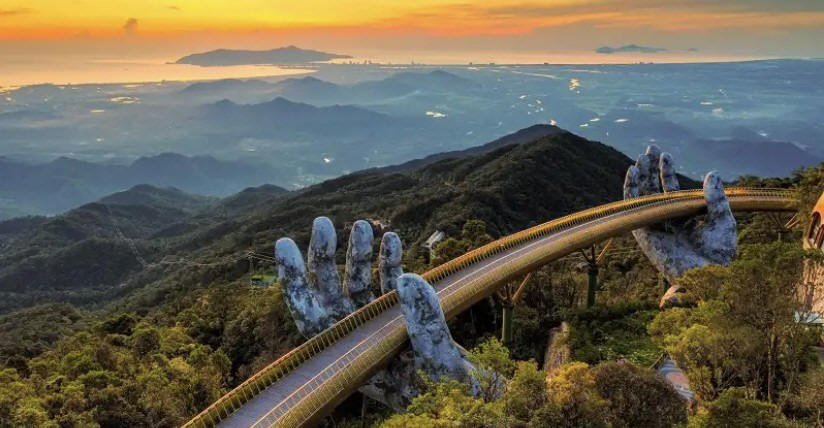
 Ba Na Hills – Golden Bridge

Golden Bridge.

* Le Jardin D’Amour Flower Gardens.

* Debay Wine Cellar.


French Village.

* Fantasy Park.

Hoi An Ancient Town & Coconut Forest
 

Hoi An Ancient Town

Japanese Covered Bridge

Fujian Assembly Hall

Tan Ky Ancient House

Hoi An Central Market

Thu Bon River

My Son Santuary

 Hue City Tour

Hai Van Pass

Lang Co Bay

Thien Mu Pagoda

Hue Imperial Citadel

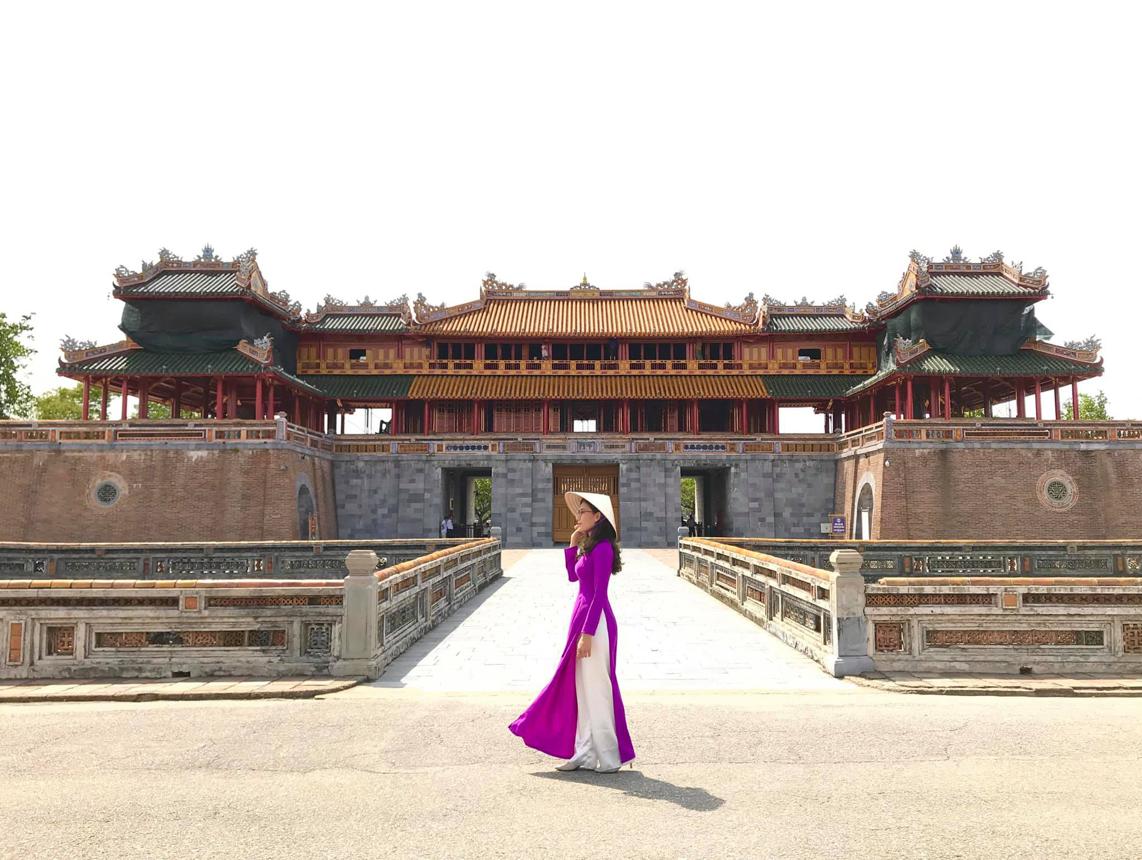
Ngo Mon Gate

Thai Hoa Palace

The Forbidden Purple City

Tomb of Emperor Khai Dinh

Tomb of Emperor Minh Mang

Tomb of Emperor Tu Duc

The Perfume River

Bao Dai – The last emperor of Vietnam


 Da Nang City Tour – Son Tra Peninsula
 

Marble Mountains

Cham Museum

Son Tra Peninsula

My Khe Beach

Dragon Bridge


Airport Transfer & Departure


YOU TUBES

https://chatgpt.com/s/t_6af9915ad5548191a074f1e9ad66878a

    Hoi An Ancient Town
Japanese Covered Bridge
Fujian Assembly Hall
Tan Ky Ancient House
Hoi An Central Market
Thu Bon River
My Son Santuary
 
Hai Van Pass
Lang Co Bay
Thien Mu Pagoda
Hue Imperial Citadel
Ngo Mon Gate
Thai Hoa Palace
The Forbidden Purple City
Tomb of Emperor Khai Dinh
Tomb of Emperor Minh Mang
Tomb of Emperor Tu Duc
The Perfume River
Bao Dai – The last emperor of Vietnam
 
Marble Mountains
Cham Museum
Son Tra Peninsula
My Khe Beach
Dragon Bridge
 
 
LOCATION MAPS
    Hoi An Ancient Town
Japanese Covered Bridge
Fujian Assembly Hall
Tan Ky Ancient House
Hoi An Central Market
Thu Bon River
My Son Santuary
 
Hai Van Pass
Lang Co Bay
Thien Mu Pagoda
Hue Imperial Citadel
Ngo Mon Gate
Thai Hoa Palace
The Forbidden Purple City
Tomb of Emperor Khai Dinh
Tomb of Emperor Minh Mang
Tomb of Emperor Tu Duc
The Perfume River
Bao Dai – The last emperor of Vietnam
 
Marble Mountains
Cham Museum
Son Tra Peninsula
My Khe Beach
Dragon Bridge


Central Vietnam Tour

Da Nang – Hoi An – Hue | 2–3 Day Guided Tour

Presentation script for your tourists

Here is how I would introduce the three destinations as a tour guide:

My recommendation as a tour guide: Don't overwhelm tourists with dates and names. Tell them stories about people, trade, religion, emperors and wars. These are the things they are more likely to remember.Opening: Understanding Central Vietnam

Central Vietnam – From Ancient Kingdoms to International Trade, Imperial Glory and Modern Vietnam."

"Welcome to Central Vietnam. This region has a fascinating story because it has experienced ancient kingdoms, international trade, imperial rule, French colonisation and the Vietnam War.

We are going to visit three important places, and each tells a different chapter of Vietnam's history.

Da Nang tells us about Vietnam's transformation into a modern nation.

Hoi An takes us back to the days when merchants from China, Japan, Europe and other countries came here to trade.

Hue brings us into the world of Vietnamese emperors, royal palaces and imperial traditions.

By visiting these three places, you will understand much more than just the scenery. You will understand the history and identity of the Vietnamese people."

When arriving at Hoi An

"Imagine that we are travelling back 300 to 400 years. This town was once one of the busiest international trading ports in Southeast Asia.

Japanese ships, Chinese merchants and European traders came here to exchange goods.

Look at the buildings around us. They tell the story of different communities living and working together. Hoi An is a wonderful example of how international trade shaped the culture and architecture of Vietnam."

When arriving at Hue

"Now we are entering the world of Vietnam's last royal dynasty.

For more than 140 years, Hue was the imperial capital of Vietnam. Emperors lived here, made national decisions and built magnificent palaces and tombs.

The Nguyen Dynasty ended in 1945 when Emperor Bao Dai abdicated.

Today, the remaining palaces, temples and royal tombs allow us to appreciate the grandeur of Vietnam's imperial past."

Da Nang, Hoi An and Hue, Vietnam

Da Nang, Hoi An and Hue are three of the most interesting destinations in Central Vietnam. Although they are geographically close to one another, each has a very different history and character.

When introducing them to tourists, I suggest presenting them as three chapters of Vietnamese history:

  1. Da Nang – The gateway to Central Vietnam: A coastal trading and military city that developed into a modern economic centre.
  2. Hoi An – The ancient trading port: A historic international trading town where Vietnamese, Chinese, Japanese and European cultures came together.
  3. Hue – The imperial capital: The home of Vietnam's emperors, royal court, palaces and tombs.

This makes a good story for tourists because they can understand how Vietnam developed through trade, foreign influences, imperial rule and modern history.

Comparing the three destinations

This is a useful summary to give tourists before or during the journey.

Subject Da Nang Hoi An Hue
Main identity Modern coastal city Ancient trading port Imperial capital
Historical influence Champa, French, American Vietnamese, Chinese, Japanese, European Nguyen Dynasty, Chinese, French
Main attraction Beaches and mountains Old town and lanterns Palaces and royal tombs
Famous architecture Bridges and temples Merchant houses and assembly halls Imperial palaces
Famous food Seafood and Mi Quang Cao Lau and White Rose Bun Bo Hue
UNESCO heritage No city-wide listing 1999 1993

Geography and location- distance

Da Nang
Hoi An Ancient Town
Hue Imperial City

Approximate travel distances:

  • Da Nang to Hoi An: 30 km, approximately 45–60 minutes by road.
  • Da Nang to Hue: approximately 95–100 km, around 2–3 hours by road.
  • Da Nang to Hue via Hai Van Pass: A particularly scenic journey through mountains overlooking the sea.

The Hai Van Pass is worth highlighting. Its name means Ocean Clouds Pass.

 It separates Da Nang from Hue and historically served as an important geographical and military boundary.

It is also a wonderful place for photographs.

Ten interesting facts to share with tourists

These are useful conversation starters during the journey.

  1. Vietnam's traditional national dress, the Ao Dai, is a symbol of Vietnamese cultural identity.
  2. The Vietnamese language uses the Roman alphabet, developed through the work of missionaries and Vietnamese scholars.
  3. Hoi An was historically known to Western traders as Faifo.
  4. Hoi An's Japanese Covered Bridge is one of the town's most recognisable historical structures.
  5. The Champa civilisation had strong Hindu influences, particularly in its temples and sculptures.
  6. Da Nang was the first landing location for major US ground combat forces in Vietnam in 1965.
  7. Hue was the capital of the last Vietnamese imperial dynasty.
  8. Emperor Bao Dai was Vietnam's last emperor.
  9. Vietnamese cuisine varies considerably between the north, central and southern regions.
  10. Vietnam celebrates Lunar New Year, known as Tet, its most important traditional festival.

Historical references & pics

For more detailed research and historical photographs, these are particularly useful:

More historical research sources

For further preparation, these are particularly useful authoritative references:

  1. UNESCO – Hoi An Ancient Town – trading history, architecture and cultural influences.
  2. UNESCO – Complex of Hue Monuments – Nguyen Dynasty, imperial planning and historical significance.
  3. Hoi An Heritage – History and Culture – local historical records and Champa trading history.
  4. Vietnam Tourism – Da Nang – attractions and geographical background.
  5. Vietnam Tourism – Must-visit Places in Da Nang – Dragon Bridge, Marble Mountains and Ba Na Hills.
  6. Vietnam Tourism – Central Vietnam – Hai Van Pass and regional travel.

My suggestion for your next stage

I would take this material one step further and turn it into a 24–30 slide PowerPoint tour-guide presentation, with:

  • Historical photographs and present-day photographs side by side.
  • Maps showing the geographical relationship between Da Nang, Hoi An and Hue.
  • A timeline of the Champa Kingdom, Nguyen Dynasty, French colonial period and Vietnam War.
  • Photographs of the emperors, royal palaces, temples and historic trading houses.
  • Speaker notes containing the full storytelling scripts above.
  • Interesting anecdotes and questions to engage tourists.

This would give you a reusable teaching and tour-guide resource, rather than just notes for one particular trip.

Important historical timeline

This timeline is particularly useful when tourists ask questions during the journey.

Period / Year Historical event
2nd century AD Emergence of the Champa civilisation
15th–19th centuries Hoi An develops as an international trading port
1593 (traditional dating) Construction of the Japanese Covered Bridge
1601 Thien Mu Pagoda established
1802 Gia Long establishes the Nguyen Dynasty and Hue as capital
1858 French and Spanish forces attack Da Nang
1883–1884 French colonial control over Vietnam consolidated
1916–1925 Reign of Emperor Khai Dinh
1945 Bao Dai abdicates; end of Nguyen monarchy
1963 Thich Quang Duc's self-immolation
1965 US Marines land at Da Nang
1975 End of the Vietnam War and reunification
1993 Hue Monuments listed as UNESCO World Heritage
1999 Hoi An Ancient Town listed as UNESCO World Heritage
2013 Da Nang Dragon Bridge opens
2018 Golden Bridge at Ba Na Hills opens

A few historical points to be careful about

For a professional presentation, I would distinguish historical evidence from popular stories.

  1. The Japanese Covered Bridge has a traditional construction date of 1593, but the present structure reflects later rebuilding and restoration.
  2. The legend of the giant catfish-like creature associated with the Japanese Bridge is folklore, not established history.
  3. The story of the Heavenly Lady at Thien Mu Pagoda is a local foundation legend.
  4. The Champa civilisation should not be described as having disappeared completely; Cham communities and cultural traditions continue today.
  5. The French colonial conquest occurred over several decades, not in one single military campaign.
  6. Bao Dai's abdication in 1945 ended the Nguyen monarchy, but the subsequent political history of Vietnam was complex.

I suggest developing this as a professional tour-guide storytelling programme, rather than simply a list of attractions and historical facts. The objective is to help your tourists understand the history, culture, people and development of Central Vietnam while enjoying the scenery.

I will structure the material so that you can use it directly when speaking on the coach, at historical sites, and during walking tours.

1. Basic tour concept

Theme: Central Vietnam – From Ancient Kingdoms to Imperial Glory and Modern Vietnam

The three destinations represent three important chapters of Vietnamese history:

Chapter 1 – Da Nang: The Gateway to Central Vietnam

Champa civilisation, French colonialism, the Vietnam War and modern development.

Da Nang - Hoi An - Ha Noi - Ninh Binh

Chapter 2 – Hoi An: The Meeting Point of Civilisations

Ancient maritime trade, Japanese and Chinese merchants, Vietnamese traditions and international cultural influences.


Chapter 3 – Hue: The Last Imperial Capital

The Nguyen Dynasty, emperors, royal traditions, French colonial influence and the end of monarchy.


2. Recommended itinerary

I recommend three days if the group wants to appreciate the historical sites without rushing.

Day Destination Main programme
Day 1 Da Nang Marble Mountains, My Khe Beach, Son Tra Peninsula, Dragon Bridge
Day 2 Hoi An Ancient Town, Japanese Covered Bridge, Chinese Assembly Hall, ancient merchant house, lantern culture
Day 3 Hue Hai Van Pass, Thien Mu Pagoda, Imperial Citadel, royal tomb

If you only have two days: Combine Da Nang and Hoi An on Day 1, then dedicate Day 2 to Hue. This will be a relatively intensive programme, particularly if you include the royal tombs.

The following scripts are written in conversational English, with suggested historical anecdotes, questions for tourists and visual references for each stop.

3. How to compress the programme into two days

If your group has only two days, I suggest the following arrangement.

Day Morning Afternoon Evening
Day 1 Marble Mountains and Cham Museum Son Tra Peninsula and Da Nang city Hoi An Ancient Town and lanterns
Day 2 Travel via Hai Van Pass and Lang Co Bay Thien Mu Pagoda and Imperial Citadel Royal tomb or return journey

For a two-day tour, I would prioritise:

  • Marble Mountains
  • Cham Museum
  • Hoi An Ancient Town
  • Japanese Covered Bridge
  • Hai Van Pass
  • Thien Mu Pagoda
  • Hue Imperial Citadel
  • One royal tomb

I would not try to visit all three royal tombs in a two-day programme. That would make the tour too rushed.

Practical guidance for conducting the tour

Here are some points I would recommend when delivering the actual tour.

Subject Recommendation
Historical information Explain the background before entering each site
Speaking time 5–10 minutes on the coach; 10–15 minutes at major stops
Photography Allow 10–15 minutes at major scenic locations
Food Introduce regional specialities before lunch
Religious sites Remind visitors to dress respectfully
Imperial sites Explain the difference between the Citadel, Imperial City and Forbidden Purple City
History of war Be factual, balanced and sensitive
Walking Allow sufficient time for older tourists and visitors with mobility limitations

Recommended visual presentation – Photographs to prepare

For your actual tour-guide presentation, I suggest assembling photographs in the following sequence.

Da Nang – 6 essential photographs

Hoi An – 6 essential photographs

Hue – 6 essential photographs

These are illustrative reference photographs for preparation. For a presentation, use properly credited historical archival photographs where possible, particularly for the Champa Kingdom, French colonial period and Vietnam War.


Vietnamese Culture

These are useful subjects to introduce throughout the tour.

A. Vietnamese religion and spiritual beliefs

Vietnamese spiritual life is influenced by several traditions:

  • Buddhism – compassion, karma and spiritual enlightenment.
  • Confucianism – family responsibility, respect for elders and social harmony.
  • Taoism – harmony with nature and the universe.
  • Ancestor worship – maintaining respect and remembrance of deceased family members.

You can explain:

"Vietnamese spiritual life is a mixture of different traditions. Many families practise ancestor worship at home, while also visiting Buddhist temples during important occasions.

Family respect, filial piety and maintaining harmony are important cultural values."

Be careful not to suggest that every Vietnamese person follows the same religion or practices all these traditions.

B. The importance of family and ancestors

"One of the strongest characteristics of Vietnamese culture is the importance of family.

Respect for parents and grandparents is deeply rooted in society.

Many Vietnamese families maintain an ancestor altar in their homes.

They offer incense, flowers and food as a way of remembering their ancestors.

This tradition reflects the belief that family relationships continue to be important even after death."

C. Traditional Vietnamese dress – Ao Dai

"The Ao Dai is one of the most recognisable symbols of Vietnamese culture.

It is a long tunic worn over trousers.

It is often associated with elegance, grace and Vietnamese identity.

You may see women wearing the Ao Dai during festivals, weddings, school ceremonies and special occasions."


November 24–29, 2026 | 6 Days 5 Nights
 

Day 1 – November 24: Arrival & Airport Pickup
 

* Pick up at Da Nang International Airport.

* Transfer to the hotel.

* Hotel check-in and free time to relax.


Day 2 – November 25: Ba Na Hills – Golden Bridge


* Pick up at the hotel.

* Ba Na Hills Cable Car.

* Golden Bridge.

* Le Jardin D’Amour Flower Gardens.

* Debay Wine Cellar.

* Linh Ung Pagoda.

* French Village.

* Fantasy Park.

* Buffet Lunch at Ba Na Hills.

* Continue exploring Ba Na Hills.

* Return to the hotel.


 Ba Na Hills is 30 Km west od Da Nang City

~7:30A.M - the driver and tour guide will pick you up at the hotel. Ba Na Hills is about 30 km west of Da Nang city center

Note: the car can pick you up at your hotel before or after 7.30A.M. The tour guide will contact you to inform you of the pick up time.

The group arrives at the foot of Ba Na mountain, the tour guide proceeds with the procedures to board the cable car.

With a reasonable time of 15 - 20 minutes, you can enjoy the beautiful scenery from above.

Arriving at Station 2, you begin to visit Ba Na Hills Golden Bridge located at an altitude of 1,414 m above sea level.

Continue moving to D'Amour flower garden divided into 9 gardens with 9 different themes

~12:00: Enjoy buffet lunch at restaurant system with Asian and European dishes.

The group visits and takes photos at the French village - a prominent destination when participating in the Ba Na Hills day tour.

The tour guide takes you into the large Fantasy Park amusement park with a unique design and a total of 105 different games.

4~15:30: The group gathers to go down to cable car

The whole group goes to the foot of Ba Na mountain and gets on the bus - departing for the city.


Day 3 – November 26: Hoi An Ancient Town & Coconut Forest


* Pick up at the hotel.

* Marble Mountains (Ngu Hanh Son).

* Huyen Khong Cave.

* Non Nuoc Stone Carving Village.

* Vietnam Traditional Silk Village – Famous Ao Dai Exhibition.

* Lunch near Cua Dai Beach.

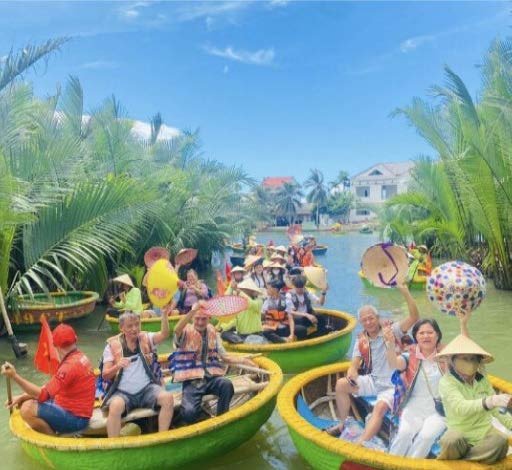
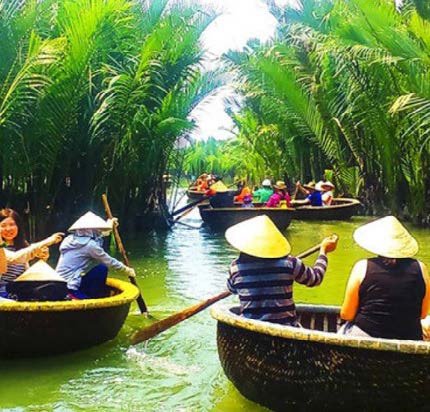
* Bay Mau Coconut Forest – Basket Boat Experience.

* Hoi An Ancient Town.

* Japanese Covered Bridge.

* Ancient Houses and Local Market.

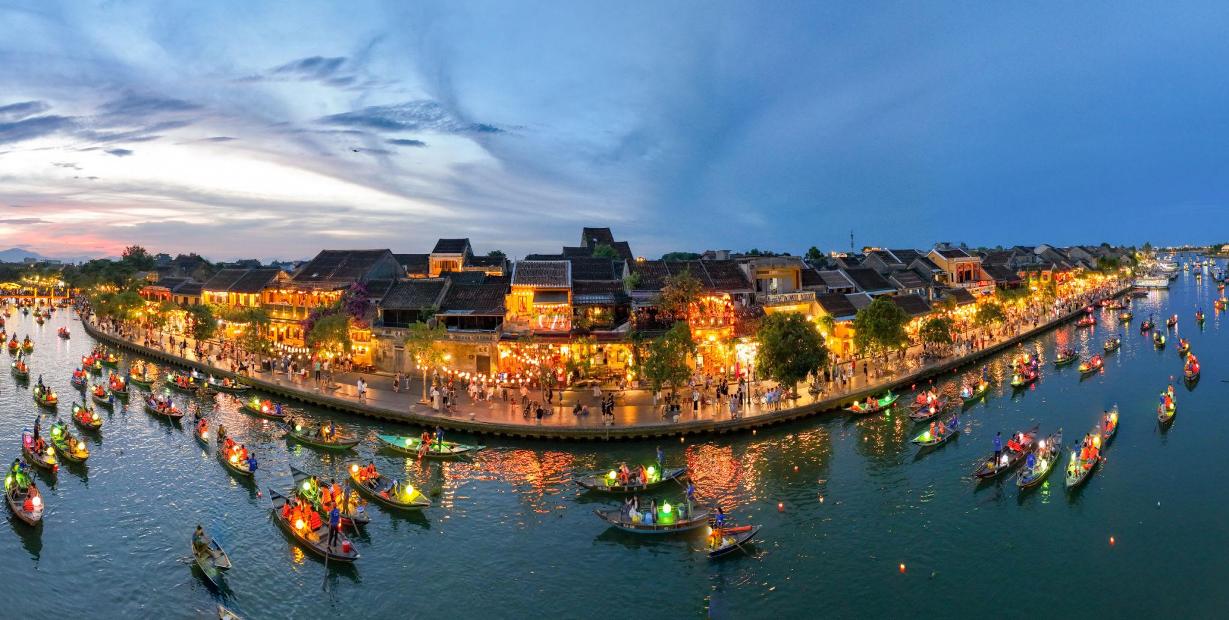
* Lantern Street.

* Hoai River Boat Ride.

* Lantern Releasing.

* Return to Da Nang.


Day 3- Hoi An – The ancient international trading port
 

Continue your journey to Hoi An Ancient Town, one of the most beautiful ancient towns in Vietnam with ancient houses with unique and characteristic architectural styles. Here, visitors will visit historical relics and beautiful architecture such as the Japanese Covered Bridge, Quan Thang Ancient House, Tan Ky Ancient House, Cantonese Assembly Hall, and visit souvenir shops to shop for famous handicrafts and ceramics.

UNESCO World Heritage Site – 1999

Hoi An is approximately 30 km south of Da Nang. It is one of the most charming historic towns in Vietnam.

Its importance comes from its history as an international trading port, particularly between the 15th and 19th centuries.

Historical background

1. Before the Vietnamese kingdom

Before becoming a Vietnamese trading town, this area was connected with the ancient Champa civilisation.

Archaeological discoveries show that the Sa Huynh people were already trading in this area as early as the 2nd century BC.

During the Champa period, the port attracted Arab, Persian, Chinese and other Asian traders.

2. The golden age of international trade (16th–17th centuries)

Hoi An became one of Southeast Asia's busiest trading ports.

Foreign merchants came from:

  • China – especially Fujian and Guangdong.
  • Japan – Japanese merchants established their own trading community.
  • Portugal and the Netherlands.
  • France and other European countries.
  • India and other parts of Asia.

What did they trade?

Exports from Vietnam Imported goods
Silk Chinese ceramics
Spices Tea
Agarwood Medicines
Sugar Metal goods
Ceramics Other luxury goods

The town was also known to Western traders as Faifo.

One interesting story is that the Japanese and Chinese communities established their own residential and commercial areas. Their influence can still be seen in the architecture today.

3. Why did Hoi An decline?

By the late 18th and 19th centuries, Hoi An gradually lost its importance as a major international port.

There were two important reasons:

  • The Thu Bon River gradually silted up, making it more difficult for large ships to enter.
  • Da Nang developed as a more suitable deep-water port, attracting international shipping.

The decline in trade actually helped preserve Hoi An's traditional buildings and streets. This is one reason why we can still experience the atmosphere of an old trading town today.

UNESCO World Heritage Centre+1
 

Six important attractions to introduce to tourists

1. Japanese Covered Bridge

One of Hoi An's most recognisable landmarks. Built by the Japanese community in the late 16th century, traditionally dated to 1593.

It symbolises the historical connections between the Japanese and Chinese communities. It has a small temple and a covered wooden walkway.

2. Fujian Assembly Hall

Built by Chinese immigrants from Fujian. It served as a gathering place, cultural centre and place of worship.

The hall is associated with Mazu, the Chinese sea goddess who protects sailors and fishermen.

3. Tan Ky Ancient House

A historic merchant's residence, illustrating how wealthy trading families lived.

Notice the combination of Vietnamese, Chinese and Japanese architectural influences, as well as the wooden carvings and traditional courtyard.

4. Thu Bon River

The river was the lifeline of Hoi An's trading economy. Merchants transported goods by boat.

Today, tourists enjoy boat rides and lantern displays, especially during the monthly full-moon lantern festival.

5. Hoi An Central Market

A good place to introduce Vietnamese daily life, local produce, traditional food and the commercial culture of the town.

6. Traditional lantern-making

Hoi An is famous for its colourful silk lanterns. The lanterns have become a symbol of the town, representing good fortune, happiness and prosperity.

Food stories – What should tourists try?

Cao Lau

Thick noodles with pork, herbs and crispy toppings. A speciality closely associated with Hoi An.

White Rose Dumplings

Delicate steamed rice-flour dumplings, usually filled with shrimp or pork.

Banh Mi

Vietnamese baguette sandwich, reflecting the French colonial influence.

Com Ga

Vietnamese chicken rice served with herbs, shredded chicken and local seasonings.

Interesting story to share: Hoi An is not simply an old Vietnamese town. It is a living example of how international trade brought different cultures together. Chinese temples, Japanese architecture, Vietnamese family houses and European influences all coexist in one small town.

DAY 3 – HOI AN: The Ancient Trading Port and Meeting Point of Cultures

Suggested duration: Full day, preferably starting in the afternoon if the group wants to enjoy the lantern-lit town in the evening.

Main storytelling objective: Explain how Hoi An became an international trading port and how foreign merchants influenced the architecture, religion, culture and food of Vietnam.

Stop 1. Hoi An Ancient Town – A 400-year-old trading community

UNESCO World Heritage Site – 1999

Historical background

Hoi An has a long history dating back to the Sa Huynh culture, before the Common Era.

It later became an important trading centre during the Champa period.

From the 15th to the 19th centuries, it developed into a major international commercial port.

Merchants from China, Japan and Europe came to trade.

Tour-guide speaking script

"Welcome to Hoi An, one of the best-preserved historic trading towns in Southeast Asia.

When we walk along these streets, I want you to imagine that we are travelling back 300 or 400 years.

At that time, Hoi An was a very important international port.

Ships from China, Japan, Portugal, the Netherlands and other countries came here to trade.

What made Hoi An special was that it was not simply a place where people exchanged goods.

It was also a place where people exchanged ideas, religion, language, architecture and culture.

Chinese merchants established communities and built assembly halls.

Japanese merchants created their own trading community.

Vietnamese families operated businesses, built houses and developed the local economy.

European merchants also came to participate in the international trade.

As you look around, notice the yellow-painted buildings, wooden shutters, tiled roofs and narrow streets.

These are not simply old buildings. They tell us the story of an international community that lived and traded together."

Interesting story: Why is Hoi An so well preserved?

"Many people ask why Hoi An has retained so many of its old buildings.

One important reason is that its commercial importance gradually declined during the 19th century.

The river became more difficult for large ships to navigate because of sedimentation, and Da Nang developed as a more suitable deep-water port.

As a result, Hoi An experienced less pressure for large-scale modern redevelopment.

Ironically, the decline of the port helped preserve its historical character."

This is a particularly good example of how economic change can influence heritage preservation.

UNESCO World Heritage Centre+1
 

Stop 2. Japanese Covered Bridge – The friendship of Japanese and Chinese merchants

Suggested speaking time: 10 minutes

Historical background

The Japanese Covered Bridge, known locally as Chua Cau, is one of Hoi An's most important landmarks.

The local heritage authority traditionally dates its construction to 1593.

It is associated with the Japanese merchant community that lived in Hoi An.

Tour-guide speaking script

"Here we have one of the most famous landmarks in Hoi An – the Japanese Covered Bridge.

This bridge tells an interesting story about the international trading community that once lived here.

During the 16th and 17th centuries, Japanese merchants came to Hoi An to trade with Vietnamese and Chinese merchants.

They established a community on one side of the town, while Chinese merchants had a strong presence on the other side.

The bridge connected these communities.

Imagine the importance of this bridge 400 years ago.

It was not just a tourist attraction. It was part of the commercial and social life of the town.

It allowed people to move between different neighbourhoods, visit shops and conduct business.

You will also notice a small temple within the bridge structure.

This makes the bridge particularly interesting because it combines practical engineering with religious and cultural traditions."

Interesting anecdote

There is a famous Japanese legend about Namazu, a giant catfish-like sea monster whose head, body and tail were believed to stretch across Japan, India and Vietnam.

In local storytelling, earthquakes and other disasters were associated with the movements of this creature. The bridge is sometimes connected with this legend.

Present this as folklore, not established historical fact.

A good question to ask

"Why do you think a bridge could become such an important symbol of friendship between different communities?"

Stop 3. Fujian Assembly Hall – Chinese migration and cultural identity

Suggested speaking time: 10–15 minutes

Historical background

The Fujian Assembly Hall was established by Chinese migrants from Fujian Province.

Chinese merchants and settlers formed associations to support their communities, maintain cultural traditions and conduct religious activities.

Tour-guide speaking script

"We are now visiting the Fujian Assembly Hall.

This building tells us about the important contribution made by Chinese immigrants to Hoi An.

Many Chinese merchants came from Fujian Province in southern China.

They travelled overseas in search of commercial opportunities and better lives.

When they settled in Hoi An, they wanted to preserve their language, traditions, religion and community relationships.

That is why they established assembly halls.

These buildings served several purposes.

They were meeting places, community centres and places of worship.

This particular assembly hall is closely associated with Mazu, the Chinese sea goddess.

Why would a sea goddess be so important to these people?

Remember that these merchants travelled by sea.

Their journeys could be dangerous, with storms, strong currents and the risk of shipwrecks.

They therefore prayed to Mazu for protection and safe passage.

Even today, you will notice incense being burned as worshippers continue these traditions."

Interesting cultural comparison

This is a good opportunity to explain the connection between Singapore and Hoi An.

Chinese migrants in Singapore also established clan associations, temples and community organisations.

You can say:

"If you visit Singapore's Chinatown, you will find similar traditions. The Chinese migrants who settled in Southeast Asia brought with them their religious beliefs, family associations and community structures."

This creates a connection that Singaporean tourists will appreciate.

Stop 4. Tan Ky Ancient House – How wealthy merchants lived

Suggested speaking time: 8–10 minutes

Tour-guide speaking script

"Now we are going to visit an old merchant's residence.

This is Tan Ky Ancient House, one of Hoi An's best-known traditional houses.

Unlike a royal palace, this is a merchant's family home.

It gives us a glimpse of how wealthy trading families lived several generations ago.

Look carefully at the architecture.

You can see Vietnamese, Chinese and Japanese influences.

The house is designed with a long and relatively narrow layout, reflecting the traditional street pattern of Hoi An.

The front of the building was used for business, while the rear had access towards the river, allowing goods to be transported more easily.

The courtyard helped bring light and ventilation into the house.

In those days, the house was not simply a place to sleep.

It was also a family home, a shop, an office and a place to receive business partners.

Imagine the conversations that took place here – merchants negotiating prices, exchanging news and discussing overseas trade."

Interesting anecdote

The traditional houses of Hoi An were designed with consideration for flooding. Many have raised floors, timber structures and adaptable storage arrangements.

Hoi An experiences seasonal flooding, so this is an important practical aspect of its architecture.

Question to tourists

"How different do you think a merchant's home was from a modern commercial building?"

Stop 5. Hoi An Central Market – The daily life of a trading town

Suggested speaking time: 15 minutes

Tour-guide speaking script

"Let us now explore the market.

For centuries, markets have been an important part of Vietnamese daily life.

Hoi An was once an international trading port, but its local market was also essential to the surrounding farming and fishing communities.

Farmers brought vegetables, rice and fruits.

Fishermen brought seafood from the coast and rivers.

Merchants supplied goods to the shops and households.

Today, the market continues to provide a glimpse of traditional Vietnamese life.

You will notice that food plays a very important role in local culture.

Vietnamese cooking uses a combination of fresh herbs, vegetables, rice, fish sauce and regional ingredients.

Central Vietnamese cuisine is particularly interesting because it often combines strong flavours, spice and fresh herbs."

Food storytelling

Cao Lau

A distinctive Hoi An noodle dish with pork, greens and crispy toppings.

White Rose Dumplings

Delicate steamed dumplings filled with shrimp or pork.

Com Ga

Local chicken rice served with herbs and shredded chicken.

Banh Mi

A Vietnamese sandwich combining the French baguette tradition with local ingredients.

A useful anecdote about Cao Lau

Cao Lau is closely associated with Hoi An. Its distinctive noodles and local preparation traditions have become part of the town's food identity.

You may hear stories claiming that its water must come from a particular ancient well. Treat these as local culinary traditions rather than a proven requirement for every modern bowl of Cao Lau.

Stop 6. Thu Bon River and Lantern Culture – The romantic side of Hoi An

Suggested speaking time: 10 minutes, ideally in the evening.

Tour-guide speaking script

"We have now arrived at one of the most beautiful parts of Hoi An – the Thu Bon River.

Historically, this river was the lifeline of the town.

Before modern roads and transport systems, rivers were among the most important commercial routes in Vietnam.

Boats carried goods between inland communities, the coastal areas and the international trading port.

Imagine merchant boats arriving here carrying silk, ceramics, spices and other valuable goods.

The river connected Hoi An with the outside world.

Today, the commercial boats have largely been replaced by tourist boats, but the river remains central to the identity of the town."

The story of the lanterns

"Look at the colourful lanterns hanging along the streets.

They have become one of the most recognisable symbols of Hoi An.

Lanterns are associated with happiness, good fortune and prosperity.

The lantern-making tradition also reflects the cultural influences brought by merchants and settlers from different parts of Asia.

During the full-moon lantern festival, parts of the town become especially beautiful as decorative lighting is reduced and lanterns illuminate the streets.

Some visitors also release small floating candle lanterns onto the river as a symbolic gesture of good wishes."

Questions for tourists

  • What do lanterns symbolise in your culture?
  • Have you seen similar lantern festivals in other Asian countries?

Photograph opportunities: River reflections, colourful lanterns, wooden boats and the illuminated old town.

Stop 7. My Son Santuary


Day 4 – November 27: Hue City Tour

* Pick up at the hotel.

* Hai Van Pass – Scenic Mountain and Coastal Views.

* Lap An Lagoon.

* Lang Co Beach.

* Thuy Xuan Incense Village.

* Khai Dinh Tomb.

* Lunch at a local restaurant.

* Hue Imperial City (Citadel).

* Thien Mu Pagoda.

* Perfume River.

* Return to Da Nang.


Day 4 -Hue – The imperial capital of Vietnam

Leaving Da Nang to Hue Ancient Capital,Journey through the road tunnel of Hai Van pass to Hue.

Note: the car can pick you up at your hotel before or after 7.30A.M. The tour guide will contact you to inform you of the pick up time.

Stop to visit Lang Co Bay, visit the famous Pearl, Dau Tram culture facility.

Arrive in Hue, visit the Citadel (The Royal Palace of 13 Nguyen Dynasty kings, the last king of Vietnam's feudal dynasties: Ngo Mon, Thai Hoa Palace, Forbidden City, The Mieu, Hien Lam Cac, Cuu Dinh) and Ancient Thien Mu Pagoda, built in the early 17th century

UNESCO World Heritage Site – 1993

Hue (pronounced approximately "Hway") is one of the most historically important cities in Vietnam.

If Da Nang represents modern Vietnam and Hoi An represents international trade, Hue represents the royal and imperial history of Vietnam.

Historical background

A. The Nguyen Dynasty (1802–1945)

The Nguyen Dynasty was the last imperial dynasty of Vietnam.

  • In 1802, Emperor Gia Long unified Vietnam and established Hue as the national capital.
  • Hue became the political, cultural and religious centre of the country.
  • The Nguyen Dynasty ruled Vietnam until 1945.
  • There were 13 emperors during the dynasty's history.

The last emperor was Bao Dai, who abdicated in August 1945 following the August Revolution.

This marked the end of more than a thousand years of Vietnamese monarchy.

UNESCO World Heritage Centre+1

B. The Imperial Citadel – The heart of royal Vietnam

The Imperial City of Hue was the centre of political and royal life.

It was constructed based on traditional Chinese imperial architecture, Vietnamese traditions and feng shui principles.

There are three important areas:

  1. The Citadel: The outer defensive walls, gates and moat protecting the royal city.
  2. The Imperial City: The area containing important royal palaces, ceremonial buildings and government offices.
  3. The Forbidden Purple City: The private residence and working area of the emperor and royal family.

One interesting point to share: Ordinary people were not allowed to enter the Forbidden Purple City. It was reserved for the emperor, his family and authorised palace personnel.


C. Important attractions in Hue

1. Thien Mu Pagoda

One of Vietnam's most famous Buddhist pagodas, founded in 1601 by Nguyen Hoang.

Its seven-storey octagonal tower is a well-known symbol of Hue. The pagoda overlooks the Perfume River.

2. Tomb of Khai Dinh

One of the most unusual royal tombs. It combines Vietnamese imperial design with French and European architectural influences.

Its interior is decorated with elaborate glass and porcelain mosaics.

3. Tomb of Minh Mang

Built for Emperor Minh Mang, who ruled from 1820 to 1841.

It is famous for its symmetrical layout, lakes, gardens, bridges and traditional architecture.

4. Tomb of Tu Duc

Emperor Tu Duc ruled from 1847 to 1883. His tomb is known for its beautiful gardens, pavilions and peaceful atmosphere.

An interesting story is that he used the complex as a retreat during his lifetime.

5. Perfume River

The river flows through Hue and is central to its scenery, history and cultural identity. It is a popular place for sightseeing and traditional music performances.

D. The French influence and the fall of the monarchy

An important historical story is how Vietnam came under French colonial rule.

  • In 1883 and 1884, French treaties established French control over Vietnam's imperial court and protectorates.
  • The Nguyen emperors continued to exist, but their political authority became increasingly restricted.
  • During the Vietnam War, Hue was the scene of particularly heavy fighting in the 1968 Tet Offensive.
  • The Imperial City suffered considerable damage, but many historical buildings have since been restored.

This is an important way to explain why Hue is not just a city of beautiful palaces, but also a city that experienced colonialism, war and national change.

5. Hue's royal cuisine

Bun Bo Hue

A famous spicy beef noodle soup, traditionally associated with Hue.

Banh Beo

Small steamed rice cakes topped with shrimp and crispy shallots.

Banh Khoai

A crispy savoury pancake filled with shrimp, pork and bean sprouts.

Royal Cuisine

Elaborate dishes associated with the Nguyen imperial court, emphasising presentation, balance and refined preparation.

Interesting story to share: Hue is famous for its refined cuisine because the imperial court demanded sophisticated food preparation. Today, Hue retains a strong culinary identity, although not every dish marketed as royal cuisine is an authentic historical palace recipe.

DAY 4 – HUE: The Imperial Capital and the Last Vietnamese Dynasty

Suggested duration: Full day, including the scenic journey from Da Nang.

Main storytelling objective: Introduce the Nguyen Dynasty, explain how Hue became the imperial capital, and tell the story of Vietnam's last emperors and the end of the monarchy in 1945.

Stop 1. Hai Van Pass – The mountain pass between Da Nang and Hue

Suggested speaking time: 10–15 minutes

Historical and geographical background

Hai Van means "Ocean Clouds".

The pass reaches approximately 496 metres above sea level and forms a natural boundary between Da Nang and Hue.

Historically, it was an important strategic route connecting the northern and southern parts of Central Vietnam.

Tour-guide speaking script

"Good morning, everyone.

Today we are travelling from Da Nang to Hue, and our journey takes us across one of Vietnam's most spectacular mountain passes – Hai Van Pass.

The name Hai Van means Ocean Clouds.

As we climb higher, you will understand why it has this name. The mountains are often covered in mist and clouds, while the sea stretches out below us.

But this pass is important for more than its scenery.

Historically, the Hai Van mountain range was a natural geographical boundary.

It separated the northern and southern areas of Central Vietnam and served as an important defensive position.

The mountain pass was also a strategic transportation route for soldiers, traders and travellers.

At the summit, you may notice old defensive structures and gates.

These remind us that this was once a strategically important military location.

Today, the pass is famous for its spectacular coastal scenery, connecting two of Vietnam's most historically significant destinations – Da Nang and Hue."

Interesting historical anecdote

The old Hai Van Gate and fortifications reflect the importance of controlling movement through this mountain corridor.

You can explain that a mountain pass was historically valuable not only because it provided access, but also because it allowed authorities to monitor and defend the route.

Stop for photographs

Point out:

  • Da Nang Bay.
  • The East Sea.
  • The mountain coastline.
  • Lang Co Bay on the Hue side.

Interesting comparison

The modern Hai Van Tunnel, opened in 2005, provides a faster route through the mountain.

This is a good example of how modern engineering has changed transportation while the historic mountain pass remains a tourist attraction.

Vietnam Tourism+1

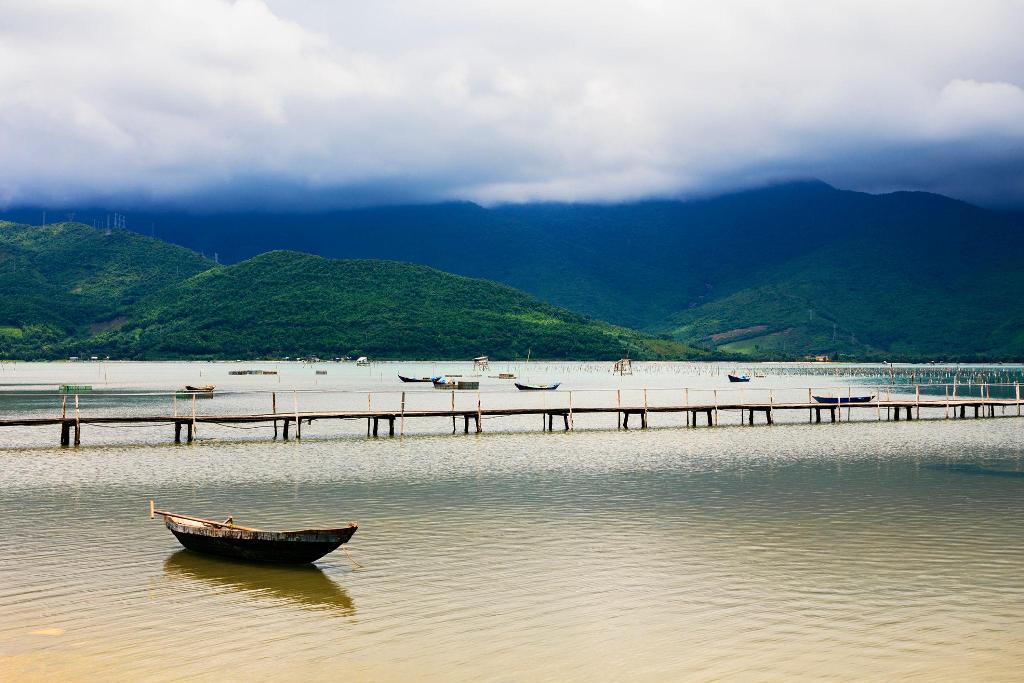
Stop 2. Lang Co Bay – The fishing and coastal community

Suggested speaking time: 5–8 minutes

Tour-guide speaking script

"Welcome to Lang Co Bay.

This is one of the most beautiful coastal areas in Central Vietnam.

Notice how the mountains, lagoon and sea come together to create a very special landscape.

For generations, the local people have depended on fishing and aquaculture for their livelihoods.

The lagoon is particularly important because it provides a sheltered environment for fishing and seafood farming.

If you look at the local villages, you can see how closely people's lives are connected with the water.

This is another important feature of Central Vietnam.

Although tourism is growing rapidly, many communities continue to maintain their traditional fishing and agricultural activities."

Suggested discussion

Ask tourists whether they prefer living in a coastal town, a mountain village or a modern city.

Stop 3. Thien Mu Pagoda – The spiritual symbol of Hue

Suggested speaking time: 15 minutes

Historical background

Thien Mu Pagoda was founded in 1601 by Nguyen Hoang, the ruler of the southern Vietnamese territories.

It is one of the most important Buddhist religious sites in Hue.

Its seven-storey octagonal tower is a famous landmark.

Tour-guide speaking script

"Welcome to Thien Mu Pagoda, one of the most famous Buddhist temples in Vietnam.

This pagoda has a history of more than 400 years.

It was established in 1601 by Nguyen Hoang, who governed the southern territories of Vietnam.

There is an interesting legend associated with its foundation.

According to local tradition, people spoke of an old lady appearing on the hill and predicting that a powerful ruler would come and build a pagoda here.

The ruler, Nguyen Hoang, was told about this story.

He subsequently ordered the construction of a temple at the location.

The name Thien Mu is often translated as Heavenly Lady or Celestial Lady.

The pagoda became an important centre of Buddhist worship and is closely associated with the history of the Nguyen rulers."

The seven-storey tower

"The tower you see here is called Phuoc Duyen Tower.

It was built in 1844 during the reign of Emperor Thieu Tri.

It has seven levels and has become one of the most recognisable symbols of Hue."

The historical story of the Austin car

One of the most significant historical exhibits here is the old Austin car.

"In 1963, a Buddhist monk named Thich Quang Duc travelled from Hue to Saigon in this car.

On 11 June 1963, he carried out an act of self-immolation in protest against religious discrimination under the government of South Vietnamese President Ngo Dinh Diem.

The event attracted international attention and became a major turning point in the political crisis in South Vietnam.

The photograph of this event became one of the most widely recognised images of the Vietnam War era.

This car is therefore an important historical reminder of the political and religious tensions of that period."

Important guide note: Present this story respectfully. Explain the historical context without sensationalising the monk's death.

Stop 4. Hue Imperial Citadel – Entering the world of Vietnamese emperors

UNESCO World Heritage Site – 1993
Suggested speaking time: 45–60 minutes

This is probably the most important historical stop of the entire three-day tour.

Part A. Introducing the Nguyen Dynasty

Historical background

The Nguyen Dynasty ruled Vietnam from 1802 to 1945.

Its founder, Emperor Gia Long, unified Vietnam and established Hue as the imperial capital in 1802.

There were 13 emperors in the dynasty, although some ruled only briefly.

Tour-guide speaking script

"Welcome to the Imperial City of Hue.

We are now entering the political and royal centre of Vietnam's last imperial dynasty.

To understand this place, we need to go back to 1802.

At that time, Vietnam had experienced a long period of political division and conflict.

A powerful ruler named Nguyen Anh eventually defeated his rivals and unified the country.

He became Emperor Gia Long and established the Nguyen Dynasty.

He chose Hue as the capital because of its strategic geographical location and its natural surroundings.

The city was planned with great attention to traditional philosophy, feng shui and imperial symbolism.

For more than 140 years, Hue was the centre of Vietnamese royal power."

Part B. Ngo Mon Gate – The entrance to imperial power

"Look at this magnificent entrance.

This is Ngo Mon Gate, the principal southern entrance to the Imperial City.

It was built during the reign of Emperor Minh Mang in the 19th century.

The gate was not simply an entrance.

It was also a ceremonial structure where important imperial events took place.

The emperor used the central entrance on important occasions, while other entrances were assigned according to rank and function.

Above the gate is the Five Phoenix Pavilion.

The phoenix is an important symbol of the empress and feminine imperial authority, while the dragon represents the emperor.

Together, these symbols reflected the authority and dignity of the royal court."

Interesting anecdote

The emperor was considered the Son of Heaven in the traditional Chinese-influenced imperial political system.

His authority was associated with the Mandate of Heaven, meaning that his right to rule was linked to maintaining moral order and harmony.

Part C. Thai Hoa Palace – The throne of the emperor

"Here we are at Thai Hoa Palace, one of the most important buildings within the Imperial City.

This was the principal ceremonial hall of the Nguyen Dynasty.

Important occasions such as coronations, royal birthdays and official ceremonies were held here.

Imagine the emperor seated on the throne while mandarins, officials and foreign representatives gathered in the hall.

Every detail of the ceremony was carefully arranged according to rank and protocol.

The architecture was designed to express the power and prestige of the emperor.

Notice the dragon decorations, the colours and the elaborate wooden structures.

The dragon was an imperial symbol and was associated with the emperor's authority."

Question to tourists

"How do you think the role of an emperor differed from that of a modern elected president or prime minister?"

This is a good opportunity to explain the difference between hereditary monarchy and modern constitutional or republican government.

Part D. The Forbidden Purple City – The private world of the emperor

"The innermost section of the royal complex was known as the Forbidden Purple City.

This was the emperor's private world.

It contained royal residences, administrative areas and facilities for the emperor and his family.

Access was highly restricted.

Ordinary citizens were not allowed to enter freely.

The emperor's daily life was governed by strict traditions and elaborate court protocol.

He had servants, officials, guards and members of the royal household attending to his needs.

Unfortunately, much of the Forbidden Purple City was destroyed during the wars of the 20th century.

Today, restoration and conservation work is helping preserve what remains."

A powerful storytelling point

"Although the emperor had enormous political power, his personal life was also restricted by royal traditions and responsibilities.

He lived in great luxury, but he was also expected to fulfil his role as the ruler of the country."

Stop 5. Tomb of Emperor Khai Dinh – The fusion of Vietnamese and European architecture

Panoramic aerial view of Khai Dinh Emperor Tomb and lush landscape near Hue Vietnam


Khai Dinh Tomb with unique architectural style combines two cultural schools East - West.

This work clearly reflects the luxury and splendor of the personality of King Khai Dinh during his lifetime.


Suggested speaking time: 15 minutes

Historical background

Emperor Khai Dinh ruled from 1916 to 1925.

He was the 12th emperor of the Nguyen Dynasty.

His tomb is particularly interesting because it combines traditional Vietnamese imperial architecture with European influences.

Tour-guide speaking script

"We are now visiting the tomb of Emperor Khai Dinh.

Among the royal tombs of Hue, this is probably one of the most unusual.

Unlike some earlier emperors, who preferred traditional gardens, lakes and natural landscapes, Khai Dinh chose a more elaborate architectural style.

Look at the mixture of influences.

You can see traditional Vietnamese and Chinese elements, together with European architectural features.

The tomb was built using concrete and other modern materials of that period.

Inside the main building, you will find extraordinary decorations made with glass, ceramics and porcelain.

The emperor's tomb therefore reflects an interesting period in Vietnamese history.

Vietnam was under French colonial control, and European influences were increasingly visible in architecture, education, administration and lifestyle."

Interesting anecdote

Khai Dinh was a controversial emperor because of his relationship with the French colonial authorities.

His tomb was expensive and took many years to complete.

It provides a fascinating example of how imperial traditions were changing during the colonial era.

Question

"Do you prefer the traditional natural gardens of the earlier royal tombs, or this more elaborate European-influenced design?"

Stop 6. Tomb of Emperor Minh Mang – The harmony of architecture and nature

Suggested speaking time: 10–15 minutes

Historical background

Emperor Minh Mang ruled from 1820 to 1841.

He was the second emperor of the Nguyen Dynasty and played an important role in strengthening the central administration.

His tomb is famous for its symmetrical layout and harmonious relationship with the natural landscape.

Tour-guide speaking script

"We are now visiting the tomb of Emperor Minh Mang.

This tomb is very different from the tomb of Khai Dinh.

Instead of elaborate European architectural influences, Minh Mang's tomb follows a more traditional imperial design.

Notice the symmetry.

The buildings, courtyards, lakes and bridges are arranged along a central axis.

The design reflects the traditional belief that architecture should exist in harmony with nature.

The emperor was also an important ruler who strengthened the administration of the Nguyen Dynasty.

His reign was associated with the consolidation of imperial authority and the expansion of the state."

Interesting observation

Compare the two tombs:

  • Minh Mang: symmetry, gardens, water and traditional imperial design.
  • Khai Dinh: elaborate decoration, concrete construction and European influences.

This comparison helps tourists understand the changes that took place in Vietnam over the 19th and early 20th centuries.

Stop 7. Tomb of Emperor Tu Duc – The emperor who loved poetry

Suggested speaking time: 10–15 minutes

Historical background

Emperor Tu Duc ruled from 1847 to 1883.

His reign was the longest among the Nguyen emperors.

He was known for his interest in poetry, literature and Confucian scholarship.

His tomb complex was also used as a retreat during his lifetime.

Tour-guide speaking script

"Here we have the tomb of Emperor Tu Duc.

This is one of the most beautiful royal tombs in Hue.

Unlike the more formal and imposing structures of some other imperial complexes, Tu Duc's tomb has a peaceful atmosphere.

You will notice lakes, gardens, pavilions and traditional buildings.

Tu Duc was known as a cultured emperor who enjoyed poetry and literature.

He spent time here during his lifetime, using the complex as a place for relaxation and reflection.

Imagine an emperor coming here to write poetry, enjoy the gardens and escape from the responsibilities of governing the country.

But his reign was also a difficult period.

French military pressure increased, and Vietnam gradually lost its independence to French colonial control.

This means the tomb reflects both the personal tastes of the emperor and an important turning point in Vietnamese history."

Historical discussion

You can explain that the French conquest of Vietnam developed over several decades, rather than happening in a single event.

The treaties of 1883 and 1884 established French protectorate control over the Nguyen court and northern and central Vietnam.

Stop 8. The Perfume River – The cultural heart of Hue

Suggested speaking time: 8 minutes

Tour-guide speaking script

"Before we conclude our visit to Hue, let us appreciate the Perfume River.

The river is one of the defining features of the city.

It flows through the imperial capital and provides a beautiful natural setting for the palaces, pagodas and royal tombs.

Historically, it was an important transportation route.

Today, it is also associated with traditional music, boat rides and cultural performances.

Hue is particularly famous for Nha Nhac, Vietnamese court music.

This traditional musical form was performed during important imperial ceremonies and royal occasions.

It is an important part of Vietnam's intangible cultural heritage.

As we look at the river, we can appreciate why the Nguyen emperors selected this location for their capital.

The combination of mountains, rivers, temples and palaces created a landscape that was both beautiful and symbolically important."

Interesting cultural fact

Vietnamese Nha Nhac, or royal court music, was recognised by UNESCO as an Intangible Cultural Heritage of Humanity in 2003.

Stop 9. Bao Dai – The last emperor of Vietnam

This is a good story to use towards the end of the Hue tour because it brings the imperial history to a conclusion.

Historical background

Bao Dai was the last emperor of the Nguyen Dynasty.

He ascended the throne in 1926 and abdicated in August 1945 following the August Revolution.

Tour-guide speaking script

"We have now reached the final chapter of Vietnam's imperial history.

The last emperor of Vietnam was Bao Dai.

He became emperor in 1926, but by this time Vietnam was under French colonial control.

The emperor's political power was greatly restricted.

In 1945, following the August Revolution, Bao Dai abdicated.

This brought the Nguyen Dynasty to an end and marked the conclusion of more than a thousand years of Vietnamese monarchy.

It is interesting to think that this magnificent imperial city, which was once the centre of royal power, became a historical monument within a few decades.

Today, Hue allows us to understand the rise and fall of Vietnam's last royal dynasty."

A concluding question

"What do you think is more important for a country – preserving its traditions or adapting to political and social change?"

This is a good discussion point for a group of mature travellers.


Day 5 – November 28: Da Nang City Tour – Son Tra Peninsula

* Pick up at the hotel.

* Linh Ung Pagoda – Lady Buddha.

* Son Tra Marina.

* My Khe Beach.

* Da Nang Cathedral – Pink Church.

* Cham Sculpture Museum.

* Lunch at a local restaurant.

* Pearl Museum.

* Han Market – Local Shopping.

* Vincom Plaza – Shopping Mall.

* APEC Park.

* Love Bridge.

* Dragon Bridge.

* Coconut Forest

* Return to the hotel.

Have Breakfast at hotel restaurant.

departure time :Driver pick up you at the hotel and take you to visit city

Note: private tour without tour guide, please inform us of departure time

Visit Linh Ung Pagoda, Son Tra Peninsula( monkey mountain), 8km from Da Nang city center, is a primeval forest with a cool climate all year round and beautiful natural landscape. It is an ideal place to relax, organize fun activities, picnics and explore wild forests.

visit the pink church and shopping at Han market

visit the coconut forest ecological area by basket boat(included).

Lunch time: have lunch in coconut village


Da Nang – The gateway to Central Vietnam

Historical background

Da Nang is today one of Vietnam's largest and most important coastal cities. It is located along the South China Sea, approximately halfway between Hanoi in the north and Ho Chi Minh City in the south.

Its history is closely connected with the ancient Kingdom of Champa.

The Champa Kingdom (approximately 2nd–17th centuries)

  • Champa was an ancient kingdom established by the Cham people in Central and Southern Vietnam.
  • The Cham people had strong maritime trading connections with India, China and Southeast Asia.
  • Their religion was heavily influenced by Hinduism, particularly the worship of Shiva, although Buddhism was also practised.
  • The nearby My Son Sanctuary was an important religious centre of the Champa civilisation.

French colonial period

  • In 1858, French and Spanish forces attacked Da Nang, then known as Tourane.
  • This marked the beginning of the French military intervention that eventually led to French colonial rule in Vietnam.
  • The French developed Da Nang as an important port and commercial centre.

Vietnam War period

  • In March 1965, American Marines landed at Da Nang, marking the beginning of the major US ground combat deployment in Vietnam.
  • Da Nang became a major American military base and airfield.
  • It played an important strategic role during the Vietnam War.

Modern Da Nang

  • After Vietnam's reunification in 1975, Da Nang gradually developed into an important economic and tourism centre.
  • In 1997, it became a centrally governed municipality.
  • Today it is known for its beaches, bridges, resorts, seafood and modern urban development.

Five interesting places to introduce

1. Marble Mountains

A group of five limestone and marble hills named after the five elements: Metal, Wood, Water, Fire and Earth. There are Buddhist temples, caves and shrines inside the mountains.

2. My Khe Beach

A beautiful sandy beach famous for its clear waters and long coastline. It also became well known during the Vietnam War as a recreational beach for American servicemen.

3. Dragon Bridge

Opened in 2013, this striking bridge resembles a golden dragon. The dragon is an important symbol in Vietnamese culture, representing power, prosperity and good fortune.

4. Linh Ung Pagoda

Famous for its enormous Lady Buddha statue, approximately 67 metres tall. It overlooks the sea and is associated with protection, compassion and peace.

5. Golden Bridge, Ba Na Hills

A spectacular pedestrian bridge supported by two giant stone-like hands. Opened in 2018, it has become one of Vietnam's most recognisable tourist attractions.

Interesting story to tell tourists: The dragon is more than a decorative symbol in Vietnam. According to Vietnamese origin mythology, the Vietnamese people descended from a dragon father, Lac Long Quan, and a fairy mother, Au Co. This is one reason the dragon has such an important place in Vietnamese identity.

DAY 5 – DA NANG: Ancient Civilisation, Coastal Heritage and Modern Vietnam

Suggested duration: Full day

Main storytelling objective: Explain how Da Nang developed from a region influenced by the Champa civilisation into a French colonial port, an important Vietnam War military centre and today's modern coastal city.

Stop 1. Marble Mountains – The spiritual and natural heritage of Da Nang

Suggested speaking time: 10–15 minutes

Historical background

The Marble Mountains, known in Vietnamese as Ngu Hanh Son, consist of five limestone and marble hills.

They are named after the five elements of traditional Eastern philosophy:

  • Kim – Metal
  • Moc – Wood
  • Thuy – Water
  • Hoa – Fire
  • Tho – Earth

These five elements represent the natural forces believed to influence the universe and human life.

The mountains became an important centre of Buddhist worship and spiritual activity. Temples, pagodas and shrines were built inside caves and on the hillsides.

Tour-guide speaking script

"Dear friends, welcome to the Marble Mountains.

Before we explore the mountains, let me ask you a question. Have you ever heard of the five elements in Chinese and Vietnamese philosophy?

They are metal, wood, water, fire and earth.

The Vietnamese believe that these five elements interact with one another and are fundamental to the balance of nature and the universe.

These five mountains are named after those elements.

But there is something more interesting about this place. These mountains are not simply geological formations. They have been sacred places for Buddhist worship for centuries.

As we walk through the caves, you will see Buddha statues, altars and temples built into the natural limestone environment.

Imagine monks and worshippers coming here hundreds of years ago. They would climb these hills, light incense and pray for peace, good health and protection.

The caves also provided places for meditation and spiritual reflection.

So, when we visit the Marble Mountains, we are experiencing both the natural beauty and the spiritual heritage of Central Vietnam."

Interesting anecdotes to share

  1. The five-element concept is also reflected in traditional architecture, feng shui and Vietnamese cultural beliefs.
  2. The caves provide a natural environment for worship, combining the natural landscape with religious architecture.
  3. During the Vietnam War, some caves in the mountains were used as shelters and places of refuge.

Questions for tourists

  • Have you visited any Buddhist cave temples in other Asian countries?
  • Which of the five elements do you think represents your personality?

Photograph opportunities: The five mountains from a distance, cave entrances, Buddha statues and panoramic views towards the sea.

Stop 2. Son Tra Peninsula and Lady Buddha – Faith and protection of the sea

Suggested speaking time: 10 minutes

Historical and cultural background

Son Tra Peninsula is a mountainous coastal area northeast of Da Nang.

It is important for its natural environment, Buddhist heritage and strategic geographical position.

The Linh Ung Pagoda is famous for its 67-metre Lady Buddha statue, representing the Bodhisattva of Compassion, known as Quan Am in Vietnamese Buddhist tradition.

Tour-guide speaking script

"Now we are visiting one of the most beautiful spiritual landmarks in Da Nang.

Please look at the enormous white statue standing above us.

This is Lady Buddha, representing Quan Am, the Bodhisattva of Compassion.

In Buddhist belief, Quan Am represents mercy, kindness and compassion towards all living beings.

There is an interesting connection between this statue and the coastal location.

For generations, fishermen and their families have depended on the sea for their livelihood.

The sea provides food and income, but it can also be dangerous because of storms and rough weather.

For this reason, local people traditionally prayed for protection and safe journeys.

The Lady Buddha statue has become an important spiritual symbol for the people of Da Nang.

From here, you can also appreciate the beautiful coastline and the geographical importance of Son Tra Peninsula."

Interesting anecdote

The popular local story associates Quan Am with protection of fishermen and sailors. You can explain that this is a religious and cultural tradition rather than a historical event that can be independently dated.

Wildlife story

Son Tra is also known for the red-shanked douc langur, an endangered primate with particularly striking colours.

If you are lucky, you may see one in the forest. However, sightings are not guaranteed.

Questions to ask

  • Why do you think many coastal communities have religious traditions connected with protection from the sea?
  • What is the significance of compassion in Buddhism?

Stop 3. My Khe Beach – The story of Da Nang during the Vietnam War

Suggested speaking time: 8–10 minutes

Historical background

My Khe is one of Da Nang's best-known beaches.

During the Vietnam War, the coastal area became associated with the American military presence. Da Nang was a major American air and naval base.

In March 1965, US Marines landed at Da Nang, marking the beginning of the large-scale deployment of American ground combat forces in Vietnam.

Tour-guide speaking script

"Looking at this beautiful beach today, it is difficult to imagine that this area once played an important role during the Vietnam War.

In March 1965, American Marines landed at Da Nang.

This was a major turning point in the American military involvement in Vietnam.

Da Nang became one of the most important American military bases in the country.

The city had an airbase, military facilities, logistics operations and medical facilities.

For American servicemen, the beaches also became places for recreation and relaxation.

But for Vietnamese people, this period represented a difficult chapter of war, separation and suffering.

Today, the same coastline has been transformed into an international tourism destination.

It is a remarkable example of how a city can move from conflict towards peace, development and international cooperation."

Interesting anecdote

You can ask tourists to imagine the contrast between the same beach in 1965 and today.

A military landscape has become a holiday destination with international hotels, restaurants and resorts.

This is a powerful way of explaining Vietnam's economic transformation.


Stop 4. Cham Museum – Understanding the ancient Champa Kingdom

     
Suggested speaking time: 15–20 minutes

This is one stop I strongly recommend including if your tourists are interested in history.

Historical background

The Champa civilisation developed in Central and Southern Vietnam from approximately the 2nd century AD.

The Cham people established a series of principalities and political centres along the coast.

They were skilled sailors, traders, builders and sculptors.

Their culture was influenced by Indian civilisation, particularly Hinduism and Buddhism.

The Cham Museum in Da Nang was established in 1915 and contains an important collection of Cham sculptures.

Tour-guide speaking script

"Before Vietnam became the country we know today, this region was home to another important civilisation – the Champa Kingdom.

The Cham people were excellent sailors and traders.

They had commercial connections with India, China and other Southeast Asian kingdoms.

One of the most interesting things about the Champa civilisation was its strong Indian cultural influence.

You will notice many Hindu gods and religious symbols in the sculptures.

For example, Shiva was one of the most important Hindu deities worshipped by the Cham people.

The Cham people also built impressive brick temples, some of which still survive today.

The best example is My Son Sanctuary, located southwest of Hoi An.

What makes this museum important is that it preserves the artistic and religious heritage of a civilisation that once played a major role in Central Vietnam."

A useful comparison for tourists

You can explain:

  • The Champa civilisation was strongly influenced by Indian Hindu and Buddhist traditions.
  • Vietnamese imperial culture was influenced significantly by Chinese political philosophy and Confucianism.
  • Both cultures contributed to the rich cultural heritage of Central Vietnam.

Questions to ask

  • Have you noticed Indian cultural influences in other Southeast Asian countries?
  • Why do you think Hinduism spread so widely through ancient maritime trade?

Stop 5. Dragon Bridge – From traditional mythology to modern Da Nang

Suggested speaking time: 8 minutes

Tour-guide speaking script

"Now let us look at one of the most recognisable symbols of modern Da Nang – the Dragon Bridge.

The bridge was opened in 2013 and crosses the Han River.

But why did the designers choose a dragon?

In Vietnamese culture, the dragon is a symbol of power, prosperity, strength and good fortune.

There is a famous Vietnamese creation legend about Lac Long Quan, the Dragon Lord, and Au Co, a fairy-like mountain spirit.

According to the legend, they had 100 children. Their descendants became the ancestors of the Vietnamese people.

This is why Vietnamese people sometimes refer to themselves as descendants of the Dragon and the Fairy.

The Dragon Bridge is therefore more than an engineering structure. It connects modern development with traditional Vietnamese identity."

Fun fact

On Saturday and Sunday evenings, the dragon normally performs its fire and water show at 9 pm.

Vietnam Tourism+1
 

Suggested tourist interaction

Ask your group:

"If you were designing a landmark bridge for your own country, what animal or symbol would you choose?"


Day 6 – November 29: Airport Transfer & Departure

* Pick up at the hotel according to your flight schedule.

* Transfer to Da Nang International Airport.

* End of Service.

HDA Travel – Private Car & Tours

Thank you for choosing HDA Travel. We wish you a wonderful holiday in Central Vietnam!


Suggested closing speech – Bringing the three destinations together

I would finish the three-day tour with a short reflection that connects all three places.

The Story of Central Vietnam

"Ladies and gentlemen, as we come to the end of our journey through Central Vietnam, I hope you have enjoyed not only the beautiful scenery but also the history and culture of this fascinating region.

We started in Da Nang, where we discovered the ancient Champa civilisation, Buddhist heritage and the transformation of a city once associated with war into a modern international destination.

We then visited Hoi An, where we travelled back in time to an era when merchants from China, Japan, Europe and other parts of Asia gathered to trade.

Finally, we explored Hue, the imperial capital of Vietnam, where emperors ruled, royal traditions flourished and the last Vietnamese dynasty came to an end.

These three destinations remind us that history is not simply about buildings, monuments and dates.

It is about people, their beliefs, their struggles, their achievements and their dreams for the future.

Central Vietnam has experienced great changes over the centuries, from ancient kingdoms to international trade, imperial rule, colonialism, war and modern development.

Yet its cultural identity, traditions and hospitality continue to live on.

Thank you for joining me on this journey, and I hope you will take home not only beautiful photographs but also a deeper appreciation of Vietnam."

Running route - Val Soliel
 
I recommend a Han River riverside out-and-back run, starting and finishing at Val Soleil Hotel, 186 Tran Phu Street. It is a good choice for a 5–6 km run because you can enjoy Da Nang's riverfront, bridges and city skyline without needing to travel to another part of town.
Recommended distance: approximately 5.5 km
Out and back

Suggested route

Start hereVal Soleil Hotel, 186 Tran Phu Street, Hai Chau, Da Nang, Vietnam4.6•Hotel
Walk ~17 minHan River Walk (Viewpoint)4.9•Tourist attraction
Walk ~5 minHan River Promenade4.4•Promenade

Route directions

  1. Start: Val Soleil Hotel – leave the hotel and head towards the Han River and Bach Dang Street.
  2. Join Bach Dang riverside promenade – turn north and follow the waterfront path.
  3. Continue towards Han River Bridge – enjoy views of the river and the bridges.
  4. Continue north along the promenade – turn around when your watch records approximately 2.5–2.7 km from the hotel.
  5. Return along the same route to Val Soleil Hotel.

The riverside promenade is a popular public walking and jogging corridor. The hotel is also conveniently located near the Han River and Dragon Bridge.

valsoleilhotel.com+3
 

Practical running advice

  • Best time: Around 5:30–7:00 am, before the heat and traffic build up.
  • Surface: Mostly paved pedestrian paths and connecting city sidewalks.
  • Traffic: Be particularly careful when crossing streets and at bridge approaches. Do not assume motorcyclists will stop.
  • Distance control: Use your GPS watch to turn around at 2.5–2.7 km. The exact distance can vary with your hotel exit and the promenade entrance.
  • Weather: Da Nang can be hot and humid. Carry water, and avoid running during heavy rain or on slippery waterfront surfaces.


Here is the alternative My Khe Beach running route, starting and ending at Val Soleil Hotel.

Route B: Hotel → My Khe Beach → Hotel

Start hereVal Soleil Hotel, 186 Trần Phú, Hải Châu, Đà Nẵng, Vietnam4.6•Hotel
Walk ~40 minMy Khe Beach4.6•Tourist attraction
Walk ~11 minMy Khe Beach4.3•Beach

Running plan

Section Approx. distance
Val Soleil Hotel to beach 2.5–3 km
Beachfront running Included in outbound distance
Return to hotel 2.5–3 km
Total 5–6 km

What you will enjoy

  • The beautiful coastline and sea breeze.
  • Local residents exercising and practising tai chi in the early morning.
  • Sunrise views over the East Sea.
  • A more refreshing natural setting than the city-centre route.

My Khe is approximately 2.5–3.1 km from the hotel, depending on the route and access point.

Planet of Hotels+2
 

My recommendation: Choose the Han River route for convenience and sightseeing; choose My Khe Beach for scenery and a more relaxing morning run. Start around 5:30–6:00 am, and use your GPS watch to control the distance.


Running Route- Sujet Marina
 
5.5–6 km riverside running loop from Sujet Marina Hotel to Dragon Bridge and back,

I recommend a 5.5–6 km riverside running loop from Sujet Marina Hotel to Dragon Bridge and back, following the beautiful Hàn River waterfront. This is a good route for enjoying Da Nang's city skyline, river views and iconic bridges.

The hotel is conveniently located at 22 Bạch Đằng Street, directly beside the Hàn River.

tripadvisor.com+1
 

1. Recommended running route

Target distance: 5.5–6 km
Easy to moderate
Start hereSujet Marina Hotel Da Nang By Haviland5.0•Hotel
Walk ~32 minDragon Bridge4.2•BridgeOpen
Walk ~29 minLove Bridge Da Nang4.2•Attraction

2. Running instructions and distance breakdown

Section Running direction Approx. distance
1 Sujet Marina → South along Bạch Đằng riverside 2.0 km
2 Continue to Dragon Bridge 0.3 km
3 Cross Dragon Bridge to eastern riverbank 0.5 km
4 Run north towards Love Bridge and beyond 0.5 km
5 Turn back, return across Dragon Bridge 0.5 km
6 Run north along Bạch Đằng back to hotel 2.0 km
  Total 5.8 km

These are planning estimates, not surveyed distances. You can adjust the eastern-bank turnaround point using your running watch.

3. Interesting sights along your route

1. Bạch Đằng Riverside Promenade

Start your run here. Enjoy the river breeze, landscaped waterfront and views of the city skyline.

2. Dragon Bridge (Cầu Rồng)

The iconic golden dragon bridge. A wonderful photo opportunity and the main landmark of your run.

3. Love Bridge

Enjoy the eastern riverbank, the famous carp-dragon statue and views of the city across the river.

4. Hàn River Skyline

On your return, enjoy the views of the bridges, river traffic and Da Nang's developing city centre.

4. My recommendations for your run

  • Best time: 5:30–7:00 am, before the heat and heavier traffic.
  • Running pace: Comfortable conversational pace; allow approximately 40–55 minutes.
  • Surface: Mainly paved riverside paths and bridge pedestrian areas.
  • Safety: Use pedestrian crossings, watch for motorbikes at road intersections and be careful on the bridge.
  • Hydration: Bring a small bottle of water, particularly in warmer weather.

My suggestion: Run this route early in the morning rather than at night. You will get better visibility, cooler temperatures and a more relaxed experience of the Hàn River.

You can also consider extending the route towards Han River Bridge if you want a slightly longer 7 km sightseeing run.